
When buying dog chews made in USA, ask where the animal ingredient comes from, where the chew is processed, and what happens between those steps. A US business address alone does not answer those questions, and domestic sourcing does not make any chew risk-free.
- Choose dog chews made in USA with specific ingredient origins and processing locations, not just a flag.
- Single ingredient dog chews still need clear preparation, handling and supervision instructions.
- Ugly Chews describes a Utah-to-Wyoming sourcing chain for its whole-hide beef chews.
- Treat sourcing transparency and suitability for your dog as separate buying decisions.
Why this matters
You want a short ingredient list and an answer you can check. Fair enough. But a label can tell you what a chew contains without telling you where it started or who handled it.
Start with a named source and a named place of production. Then check preparation and the particular chew you are considering. The Ugly Chews sourcing story shows what that kind of detail looks like: a beef processor in Nephi, Utah, and a finishing facility in Evanston, Wyoming.
For your 2026 shopping checklist, keep three separate questions in view: Where did it come from? What was done to it? Does it suit this dog? A good answer to the first question does not cancel the other two.
Dog chews made in USA: which sourcing questions should you ask?
Use these seven questions before choosing a chew. You do not need a factory tour. You need plain answers that describe the actual product, rather than the company in general.
| Question | Useful answer | What still needs checking |
|---|---|---|
| Where does the animal ingredient originate? | A country and, where available, a named supplier | Whether the answer covers this product |
| Where is the chew prepared? | Processing locations and the work done there | Any steps performed elsewhere |
| What exactly is the ingredient? | Named animal species and tissue | Added ingredients or coatings |
| How is the chew prepared? | Specific washing, drying and finishing steps | Evidence behind safety claims |
| Can the seller trace the product? | Identifying information and a clear contact route | What to retain from the package |
| Do sourcing claims cover every product? | Product-specific information | Exceptions across the range |
| What happens after you open it? | Storage, handling and supervision instructions | Suitability for your individual dog |
1. Where does the animal ingredient originate?
Ask about the ingredient, not the office. A company can be based in the United States while buying animal materials from elsewhere. Neither arrangement tells you everything about quality; the point is knowing which arrangement you are buying.
A useful answer separates where an animal was raised from where its hide or organ was processed. If the seller only knows the country, that is the answer you have. Do not turn a broad statement into a more precise origin story on its behalf.
Try asking: “For this chew, where is the beef hide sourced, and can you name the processor?” That is harder to dodge than “Are you an American company?”
Keep the response with your order information. If the product page changes later, you still have the details used to make your buying decision.
2. Where is the chew actually prepared?
Preparation is not the same as putting a finished chew into a bag. Ask where washing, drying, cutting and packaging happen. A supplier might perform several steps, or different businesses might handle different parts of the process.
For a 2026 label check, read the complete wording around an origin claim. “Packed in the USA” identifies a packing location; it does not, by itself, establish where an ingredient originated or where earlier processing happened.
The Federal Trade Commission's guidance, checked in November 2026, says an unqualified Made in USA claim requires a product to be “all or virtually all” made in the United States. That includes final processing, significant processing, and ingredient or component origins. This is a general labeling standard, not a safety certification for dog chews.
Ask for the chain, not just the last stop. A named location is helpful when the seller also explains what happens there.
3. What exactly is the single ingredient?
“Beef” identifies the animal. It does not identify the body part. Hide, tendon and liver are different materials, with different uses and textures.
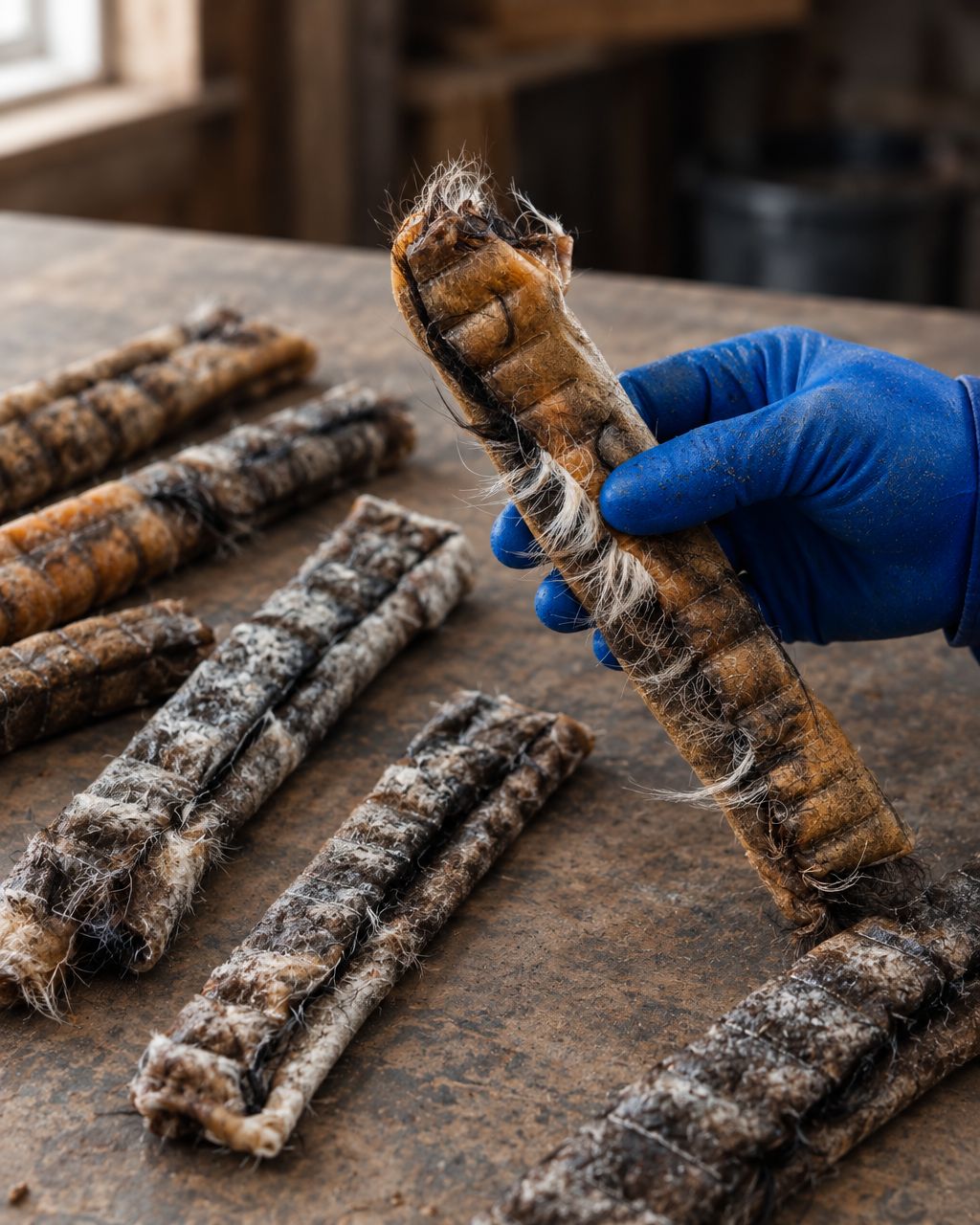
For a whole-hide chew, ask whether the material is whole hide or a separated layer, and whether hair remains. For an organ treat, ask which organ it contains. You should not have to infer the ingredient from a photograph or a rustic product name.
Then check for additions:
- Flavor coatings or bastes.
- Preservatives named in the ingredient list.
- Other animal proteins.
- Ingredients described separately from the main material.
A one-ingredient label is useful information. It is not a promise that the product is appropriate for every dog, or that the ingredient cannot cause a reaction. If your dog follows a veterinary diet, check with the veterinarian before adding any chew.
4. How is the chew washed, dried and finished?
“Natural” is not a processing description. Ask what happens to the material from arrival to the finished chew, including washing and drying.
Look for an explanation you can follow: what is removed, what stays, how moisture is reduced, and whether anything is added. If you are avoiding particular additives, ask about those specifically rather than relying on broad “chemical-free” wording.
Keep a second question separate: what evidence supports any claim about controlling bacteria? Washing or drying is not, by itself, proof that a chew is sterile. Nor does a gentle-sounding process establish a medical benefit.
Useful follow-ups include:
- What preparation steps apply to this product?
- Is there a documented food-safety process?
- What does any testing actually cover?
- What handling instructions should I follow at home?
You do not need to decide which industrial process is best from a sales paragraph. You need enough information to avoid treating a marketing adjective as a test result.
5. Can the seller trace the chew if there is a problem?
Before throwing away a package, look for identifying information and contact details. Ask the seller which information it needs to investigate an issue with a particular order.
A batch or lot code can help distinguish production groups when the business uses that system. An order number identifies your purchase. They serve different purposes, so keep both when available.
Save:
- The original product name and size.
- Your order confirmation.
- Package labels and any batch information.
- Photos if the product looks damaged or unexpected.
Do not assume a brand has batch testing, a certification, or a particular tracking system because its website looks professional. Ask what exists. A clear answer about the limits of its records is more useful than a confident answer with no detail.
6. Does the sourcing answer cover this exact product?
A statement about hide rolls does not automatically describe a bag of liver treats. The animal material, supplier and preparation can differ between products, even under the same brand.
Check the item you intend to buy, including its variant. A general brand story is a starting point, not a substitute for product information.
This also matters when you reorder in 2026 or later. If a sourcing detail is important to you, confirm it remains current instead of relying indefinitely on an old screenshot.
For gift purchases, keep the recipient's dog's needs in the decision. A transparent source still does not tell you whether a thick roll, a thin hide or a quick training treat is the right choice.
7. What handling and supervision does the chew require?
Sourcing ends at your door. Safe handling does not.
Read the package directions for storage and use, and ask the seller when they are unclear. Do not invent a storage routine for a damp, partly chewed animal product based on how you store an unopened bag.
Choose a format that suits your dog's size and chewing behavior. Stay present during chewing, and take away pieces that become a swallowing concern. A dog that gulps large pieces needs a different decision from a dog that slowly works a chew.
No US sourcing claim replaces supervision. If your dog has dental trouble, swallowing problems or a history of obstruction, ask your veterinarian whether an edible chew belongs in the routine at all.
Why sourcing answers vary between chews
Two bags can both feature an American flag and still provide very different amounts of information. Judge the details, rather than filling the gaps with assumptions.
The differences worth checking include:
- Material: whole hide, a separated hide layer and an organ are not interchangeable descriptions.
- Supply chain: a named processor gives you a more specific starting point than a country alone.
- Preparation: washing, drying and finishing are separate steps worth understanding.
- Product range: different items can follow different sourcing routes.
- Documentation: a seller should distinguish what it knows from what it cannot verify.
Use the same questions across sellers. That keeps the comparison fair without assuming that a country, a small workshop or a long supplier list automatically determines safety.
A whole-hide example: what the details actually tell you
Ugly Chews describes sourcing its beef hides from Bar W Beef in Nephi, Utah, then drying and finishing them in Evanston, Wyoming. Its published process story describes slow, low-temperature drying with temperature-controlled rooms, fans and dehumidifiers, followed by cutting, sorting and packaging.
Ugly Chews whole-hide dog chews are a fit for owners who want a single beef-hide ingredient and a named Utah-to-Wyoming sourcing chain. That is a sourcing recommendation, not a claim that whole hide is risk-free or right for every dog.
The useful strengths are specific origins, an explained process and identifiable chew formats. The limitations matter too: the animal ingredient is beef, an edible hide still needs supervision, and sourcing information does not predict how long your particular dog will take to chew it.
If a whole-hide format suits your dog, inspect the current size choices for Hair-On Hide Rolls. Start with fit and chewing behavior, not the largest-looking roll or a promise of hours of entertainment.
How do you compare labels without overcomplicating it?
Put the package next to the product page and answer the seven questions once. Mark missing answers as unknown. That is more honest than treating every missing detail as either a red flag or a reassuring sign.
For a first order, prioritize the information that would change your choice: the actual animal ingredient, where preparation happens, what is added, and instructions for your dog. Attractive packaging does not get an extra vote.
Keep your 2026 buying checklist short enough to use again. If a seller responds with a slogan, repeat the specific question. If it cannot answer a detail that matters to you, choose on the information you actually have.
FAQ
Does packed in the USA mean a dog chew is made in the USA?
No. Packing identifies one step and does not, by itself, establish the ingredient's origin or where earlier processing happened. Ask about sourcing and preparation separately.
Are dog chews made in USA automatically safer?
No. Domestic origin is not a guarantee against choking, obstruction, tooth damage or bacterial risks. Check preparation, handling instructions and suitability for your dog.
What should a single ingredient dog chew label tell me?
It should let you identify the animal ingredient rather than relying on a broad product name. Ask the seller which tissue it uses and whether anything is added during preparation or finishing.
Where do Ugly Chews whole-hide chews come from?
Ugly Chews describes sourcing beef hides from Bar W Beef in Nephi, Utah, and drying and finishing them in Evanston, Wyoming. Its sourcing story explains that hide-chew route; check other products separately.
Does a short ingredient list prove a chew is free of bacteria?
No. Ingredient count does not establish bacterial safety. Follow handling instructions and ask what evidence supports any preparation or testing claim.
What should I save from a bag of dog chews?
Keep the product label, order confirmation and any batch or lot information. Those details help a seller identify the purchase and investigate a concern.
Should I ask my vet before trying a whole-hide chew?
Ask your veterinarian when your dog has dietary restrictions, dental problems, swallowing difficulties or a history of obstruction. A sourcing claim cannot establish suitability for those conditions.
One last thing
The shortest ingredient list still deserves a sourcing conversation. One ingredient tells you what is in the chew; it does not tell you every step that ingredient took to reach your dog.
Keep asking until you can describe the route in plain words. Then make a separate decision about whether that chew fits the dog in front of you.


