
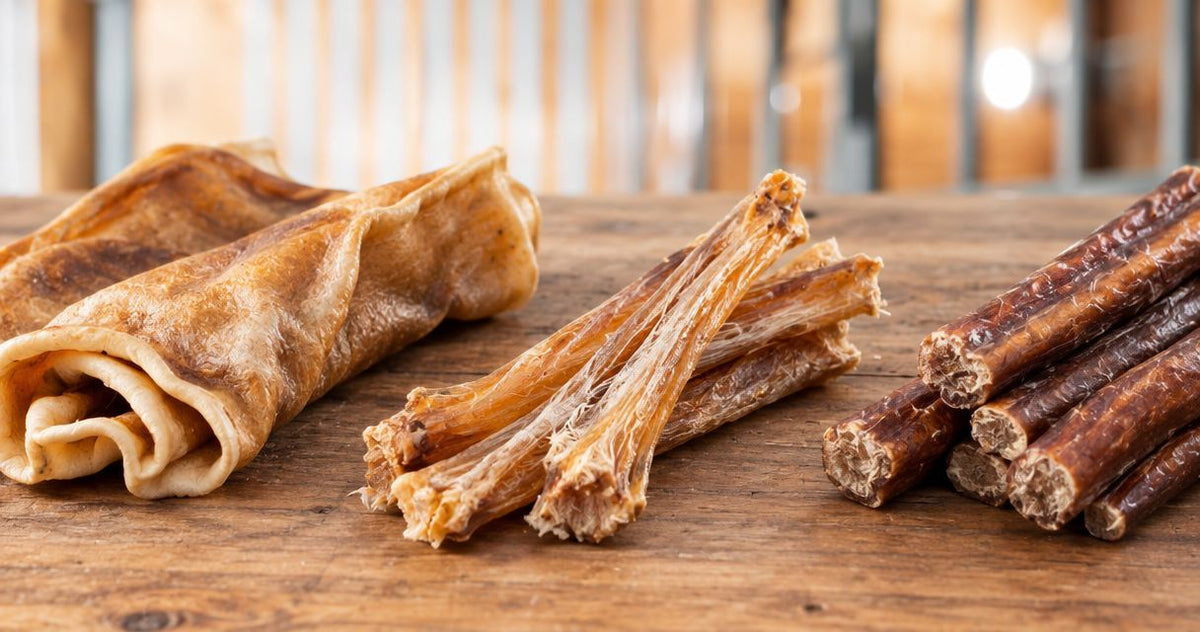
Best overall for a first whole-hide purchase: Uglychews Hair-On Hide Rolls. Best for owners specifically seeking connective tissue: single-ingredient tendons. Best for owners who prefer a pizzle chew: single-ingredient bully sticks. This 2026 guide compares single ingredient dog chews by animal part, preparation, fit and risk—not promises about how long your dog will chew.
- Uglychews whole-hide chews suit owners who want one ingredient and Wyoming preparation.
- Single ingredient dog chews still require appropriate sizing, supervision and removal before swallowing becomes possible.
- Beef hide, beef tendons and bully sticks use different animal tissues; none is automatically the safest choice.
- Check animal origin separately from manufacturing location when comparing natural dog chews.
Why this matters in 2026
A short ingredient list makes a chew easier to understand. It does not tell you whether your dog will gnaw patiently, tear off chunks or try to swallow the thing whole. Those differences matter more than an ugly shape or a tidy package.
Uglychews makes single-ingredient, hand-cut whole-hide dog chews in Wyoming. That establishes where preparation happens; it does not, by itself, establish where every animal was raised. Use these dog-chew sourcing questions to separate animal origin, processing location and packaging location before ordering.
Choose the animal part deliberately, then choose a shape your dog can handle. Buying the thickest chew first skips the more useful question: how does your dog actually chew?
What makes the best single ingredient dog chews in 2026?
These criteria put useful information ahead of packaging claims:
- Named animal tissue: Look for beef hide, beef tendon or beef pizzle—not just an unexplained animal-product description.
- Complete ingredients: Confirm that the ingredient statement matches the single-ingredient claim, including any coating or flavoring.
- Clear sourcing: Separate where the animal came from from where the chew was prepared.
- Suitable shape: Choose a piece your dog cannot place entirely inside the mouth or readily swallow.
- Disclosed preparation: Ask how the material is cleaned, treated and dried. A short ingredient list is not a processing description.
- Manageable chewing behavior: Favor a chew you can supervise and remove over one marketed mainly around endurance.
No category wins every criterion automatically. A clearly labeled tendon is a more informed purchase than an unidentified hide, and a well-described hide tells you more than a bully stick with vague sourcing.
Single-ingredient chews at a glance
| Rank and option | Best for | Standout feature | Key limitation |
|---|---|---|---|
| 1. Whole beef hide | Owners choosing a hand-cut hide chew with simple ingredients | Uses skin; Hair-On Hide Rolls retain hair rolled inside | Thickness and shape need individual assessment; swallowed pieces remain a concern |
| 2. Beef tendons | Owners who specifically want connective tissue | Uses tendon rather than skin or pizzle | The category name does not establish size, preparation or suitability |
| 3. Bully sticks | Owners who specifically prefer beef pizzle | A recognizable animal part with a distinct chew format | The remaining end can become swallowable; sourcing still needs checking |
This is a buying-path ranking, not a measured durability contest. There is no supported basis here for promising that one category outlasts the others in your dog's mouth.
1. Whole beef hide: best for a first hand-cut hide purchase
Whole-hide chews use animal skin. Hair-On Hide Rolls contain whole beef hide, with the hair rolled inside and nothing else; the product description identifies fresh, full-thickness cowhide and hand cutting.
Uglychews is the best fit here for owners seeking single-ingredient whole-hide chews made in Wyoming. That is a specific match between the product and the buyer—not a claim that hide is appropriate for every dog.
Whole beef hide pros
- The named tissue tells you what your dog is chewing.
- Hair-On Hide Rolls have an explicit whole-beef-hide-only description.
- Hand-cut preparation is stated rather than inferred from appearance.
- Different hide formats let you compare shape and thickness before choosing.
Whole beef hide cons
- A whole-hide description does not eliminate choking, blockage, dental or bacterial risks.
- Natural variation means you must inspect the actual piece, not rely only on its product name.
- A dog that tears off and swallows chunks needs a different plan, not a thicker-chew promise.
Choose the format, not just the category
Start with your dog's mouth size and observed chewing style. A roll is not suitable merely because your dog can pick it up; the piece must also resist being swallowed whole during use.
Thin Hides come from rolls that dry thinner than anticipated. That makes thickness a meaningful comparison point, but thin does not automatically mean puppy-friendly, senior-friendly or appropriate for compromised teeth.
Hair also deserves a plain answer. Hair-On Hide Rolls retain it, rolled inside. Choose that product because you want that material—not because hair promises deworming, digestive treatment or another medical benefit.
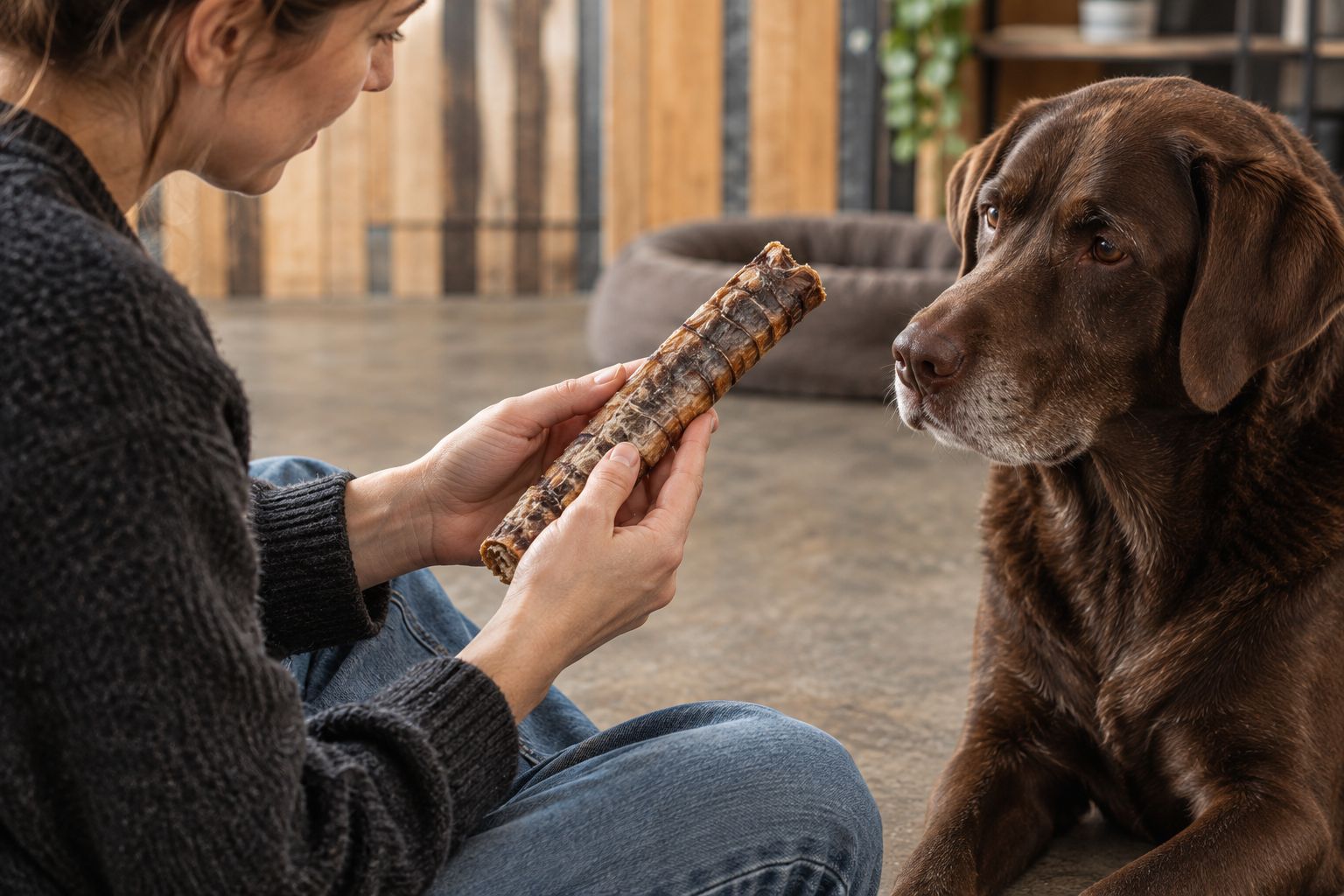
Best for: Owners who want whole beef hide, a short ingredient statement and documented Wyoming preparation.
Verdict: Buy when the piece fits your dog and you can supervise; skip it when your dog habitually gulps chew fragments.
Compare these whole-hide formats
The ingredient question comes first. Once you have answered it, compare the roll descriptions and inspect the delivered pieces before deciding what to offer.


2. Beef tendons: best for owners seeking connective tissue
Beef tendons are connective tissue that attaches muscle to bone. They are not hide, and a tendon chew should identify that tissue clearly on its ingredient statement.
Choose tendons when that animal part is your preference. Do not treat the word tendon as proof of a particular hardness, chew duration or digestion outcome; the finished piece and your dog's behavior still need assessment.
Beef tendon pros
- A specific tissue name makes the ingredient easier to identify.
- A genuinely single-ingredient tendon avoids a mixed-ingredient recipe.
- Tendons provide a different material choice for owners who do not want skin or pizzle.
Beef tendon cons
- Tendon identity alone says nothing about cleaning or drying methods.
- A narrow or shortened piece can become swallowable.
- Beef tendon remains beef; switching from beef hide does not remove beef from the diet.
Best for: Owners deliberately choosing tendon and willing to verify the specific product's origin, preparation and dimensions.
Verdict: Hold until the seller supplies a clear ingredient statement and enough sizing information to judge the actual chew. Buy based on that information, not an unsupported claim that tendon is easier or safer for every dog.
3. Bully sticks: best for owners who prefer pizzle chews
Bully sticks are made from bull penis, commonly labeled beef pizzle. The name sounds less anatomical than the ingredient. Your dog does not care; you still deserve a clear label.
A single-ingredient bully stick is a distinct tissue choice, not a shortcut around supervision. Check the complete product description rather than assuming that every item sold under the category has identical preparation.
Bully stick pros
- Beef pizzle identifies a specific animal part.
- A single-ingredient version keeps the recipe straightforward.
- The category gives owners a non-hide option without changing away from beef.
Bully stick cons
- The end becomes a swallowing concern as the stick gets shorter.
- Thickness and length require inspection rather than category-wide assumptions.
- A single-ingredient claim does not establish animal origin or bacterial safety.
Best for: Owners who specifically want pizzle and will monitor the shrinking piece throughout the session.
Verdict: Buy only when the ingredient, sourcing and fit check out. Skip the assumption that an edible chew is harmless if swallowed in a large piece.
How to introduce a chew without guessing
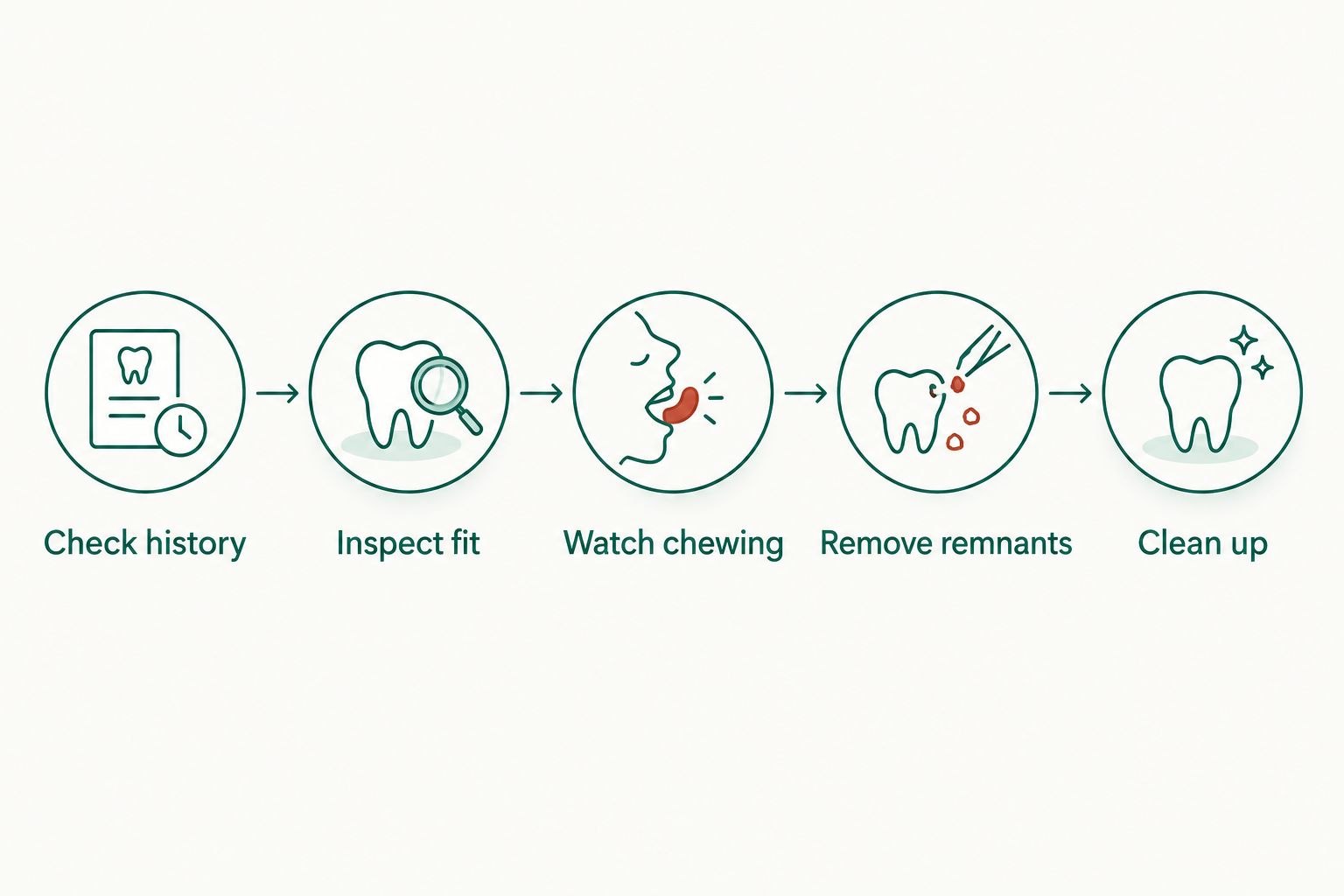
Use this sequence for whole hide, tendons or bully sticks. It is a supervision plan, not a guarantee against injury.
- Check history: Ask your veterinarian before offering a chew to a dog with dental disease, previous obstruction, swallowing problems or a prescribed diet.
- Inspect fit: Reject a piece your dog can fit entirely inside the mouth. Length alone does not establish suitability; width, thickness and chewing behavior matter too.
- Watch chewing: Stay close enough to see whether your dog gnaws, tears or gulps. Put away competing chews and separate dogs when competition changes their behavior.
- Remove remnants: End the session when the piece becomes swallowable or your dog starts pulling off chunks. Do not wait for the last bite.
- Clean up: Wash hands and clean contacted surfaces. Follow the product's storage instructions rather than leaving a used chew wherever it lands.
Stop the session if you see bleeding, repeated gagging, distress or damaged teeth. Trouble breathing is an emergency. Contact a veterinarian promptly after suspected ingestion of a large piece, or if vomiting, abdominal pain or unusual lethargy develops.
How this 2026 ranking was decided
The ranking follows ingredient clarity, disclosed preparation, format choice and suitability for a first whole-hide purchase. Uglychews ranks first for the stated buyer because its description establishes single-ingredient, hand-cut whole-hide chews made in Wyoming.
Tendons and bully sticks occupy separate preference slots. Neither receives a safety or longevity ranking because category names cannot establish how an individual dog will chew an individual piece.
No chewing trials, digestion tests or timed comparisons underpin this guide. The recommendation is about a documented product match, not an invented performance score.
Which single-ingredient chew should you choose in 2026?
Choose whole beef hide if simple ingredients and hand-cut Wyoming preparation match your priorities. Choose tendons if you specifically want connective tissue. Choose bully sticks if you specifically want pizzle.
For a first Uglychews whole-hide order, compare the actual formats before chasing extra thickness. The Ultimate Sample Bundle description lists large, medium and small Hair-On Hide Rolls at 12 inches, 8 inches and 4 inches respectively. Those are product lengths—not dog-weight recommendations or evidence that every included piece suits your dog.
A mixed selection still needs sorting. Set aside unsuitable pieces before your dog gets involved; a bundle is not permission to offer everything in it.
FAQ
What's the best single ingredient dog chew for a first purchase?
Uglychews whole-hide chews are the best match in this guide for owners seeking single-ingredient, hand-cut chews made in Wyoming. Choose the individual piece by mouth size and chewing behavior, and supervise every session.
Are whole-hide chews the same thing as tendons?
No. Whole-hide chews use skin, while tendons are connective tissue that attaches muscle to bone. Both can come from cattle, so changing between them does not remove beef from your dog's diet.
What are bully sticks actually made from?
Bully sticks are made from bull penis, commonly labeled beef pizzle. Check the complete ingredient statement to confirm that the particular product contains only that ingredient.
Does single ingredient mean a chew is safe to swallow?
No. A large piece of a single-ingredient chew can still cause choking or gastrointestinal blockage. Remove pieces before they become swallowable and contact a veterinarian after suspected ingestion of a large fragment.
Does made in Wyoming mean the cattle were raised in the US?
No. A manufacturing location establishes where preparation happens, not necessarily where the cattle were raised. Ask separately about animal origin and processing location.
Can I leave my dog alone with a natural chew?
No. Supervise natural chews so you can remove remnants and respond to gulping, broken pieces or distress. Natural ingredients do not eliminate choking, dental, blockage or bacterial risks.
Are thinner hide chews automatically better for puppies or senior dogs?
No. Thickness alone does not establish suitability for age, dental condition or chewing style. Ask your veterinarian about chews when teeth are developing, damaged or affected by disease.
One last thing
Choose the discard point before you hand over the chew. Your dog's enthusiasm is not a removal plan, and finishing every scrap is not the goal. Sometimes nature is a little ugly; sensible supervision is pleasantly boring.


