
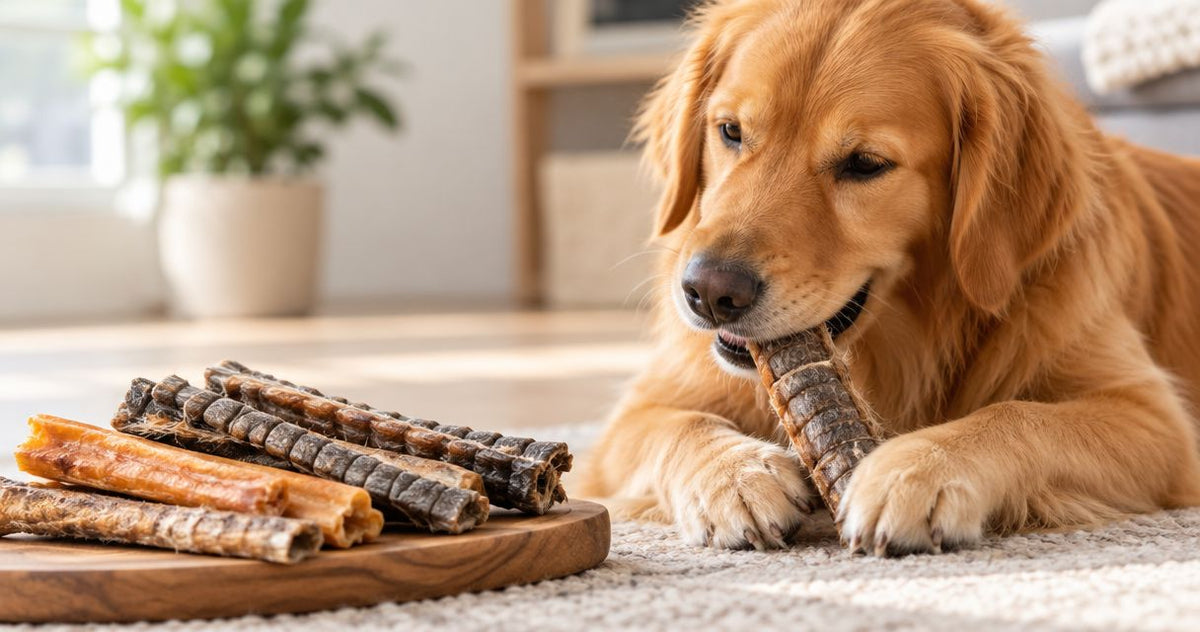
Best overall for owners avoiding added flavors: Hair-On Hide Rolls. Best thinner-hide option: Thin Hides. Best alternative to hide: single-ingredient bully sticks. Best for checking shaped-chew ingredients: unflavored collagen chews. This 2026 guide compares what you actually get—and what still needs watching.
- Uglychews Hair-On Hide Rolls are the best natural dog chews here for owners prioritizing a stated whole-beef-hide ingredient.
- Choose whole-hide chews by size and chewing behavior, not promises about how long they last.
- Single-ingredient bully sticks offer an alternative to hide; collagen chew recipes require product-by-product checking.
- Natural dog chews still carry choking, blockage, dental and bacterial risks. Supervision is nonnegotiable.
Why this matters
Avoiding added flavors starts with the ingredient list, not the word natural. A brown chew, a rustic package and a picture of a cow do not tell you whether a product contains flavorings, coatings or other ingredients.
Uglychews whole-hide dog chews are the best fit here for owners who want a stated beef-hide ingredient and Wyoming preparation. That is an ingredient-and-preparation verdict, not a promise of safety or durability.
For your first purchase, separate three questions: What is it made from? Where is it prepared? Can your dog chew it without swallowing unsuitable pieces? A good answer to one does not answer the others.
What makes the best natural dog chews?
Use these criteria when shopping in 2026. Skip the glossy claims.
- Ingredient clarity: Look for the named animal material, not just an appealing front-label description.
- No added flavors: Check for flavorings, coatings and additional ingredients rather than assuming plain-looking means plain.
- Sourcing clarity: Separate the origin of the animal material from the place where the chew is prepared.
- Appropriate size: Choose a piece your dog cannot swallow whole, then reassess as it changes during chewing.
- Manageable chewing behavior: Watch whether your dog gnaws, tears off pieces or tries to gulp the chew.
- Honest limitations: Reject claims that natural ingredients make choking, tooth damage or contamination impossible.
Natural dog chews at a glance
The order below follows buying situations, not a claim that every dog should progress through the list. “Best for” means the closest match to that particular preference.
| Option | Best for | Standout feature | Key limitation |
|---|---|---|---|
| Hair-On Hide Rolls | A straightforward whole-hide first purchase | Whole beef hide, with hair rolled inside | Requires appropriate sizing and close supervision |
| Thin Hides | Owners specifically seeking thinner hide rolls | Rolls that dried thinner than intended | Thinner does not establish safety or a predictable chewing time |
| Single-ingredient bully sticks | Owners choosing a non-hide animal chew | Beef pizzle when that is the sole listed ingredient | Product sourcing and preparation require separate checks |
| Unflavored collagen chews | Owners considering a shaped collagen-based option | A different format from whole-hide rolls | “Collagen” alone does not establish the full recipe |
1. Hair-On Hide Rolls: best for a whole-hide first purchase
Hair-On Hide Rolls contain whole beef hide, with the hair rolled to the inside and nothing else stated in the product description. They are hand-cut from fresh, full-thickness cowhide. Uglychews makes its chews in Wyoming.
That makes Hair-On Hide Rolls the clearest starting point in this guide if your main requirement is a plainly identified material without added flavors. You do not need a complicated recipe to explain what you are buying.
Hair-On Hide Rolls pros:
- Whole beef hide is explicitly identified.
- The description states that nothing else is added.
- Hair placement is explained rather than hidden behind a vague product name.
- Hand-cut preparation is stated in the product information.
Hair-On Hide Rolls cons:
- Whole hide still presents choking and blockage risks if unsuitable pieces are swallowed.
- Wyoming preparation does not, by itself, establish where the cattle were raised.
- The ingredient description cannot predict how your dog will handle the chew.
Best for: First-time buyers prioritizing a stated whole-hide ingredient over flavor coatings or complicated formulations.
Watch the first session closely. A dog that steadily gnaws presents a different buying problem from one that immediately tries to swallow a roll. Do not treat either behavior as something a product label can solve.
Verdict: Buy if whole hide matches your dog's needs and you can supervise every session.
2. Thin Hides: best for choosing a thinner hide format
Thin Hides come from hide rolls that dry thinner than anticipated. The product description explains that difference directly; these are not presented here as a separate miracle material.
Choose Thin Hides because you specifically want a thinner hide roll, not because you assume thinner means gentler, more digestible or safer. Those are different claims, and thickness alone does not establish them.
Thin Hides pros:
- The reason for the thinner format is stated.
- They offer an alternative to a fuller hide roll.
- They keep the buying decision focused on physical format rather than added flavor.
Thin Hides cons:
- A thinner piece is not automatically appropriate for a small dog.
- Thickness does not provide a reliable chewing-time estimate.
- You still need to remove pieces that become unsuitable for your dog's mouth and behavior.
Best for: Owners who have deliberately chosen thinner hide, rather than owners looking for an automatic safety upgrade.
For a 2026 first order, resist buying by appearance alone. Consider the complete piece, your dog's mouth size and what your dog does when the material softens or separates.
Verdict: Buy for the thinner format; skip if your dog gulps pieces instead of chewing them.
Compare the two hide formats
These Uglychews whole-hide dog chews answer different format preferences. Hair-On Hide Rolls are the default recommendation; Thin Hides are the alternative when thinner rolls are specifically what you want.


3. Single-ingredient bully sticks: best for a non-hide animal chew
A single-ingredient bully stick uses beef pizzle rather than hide. That distinction matters if you want an animal-based chew but have decided against skin-based products.
Check the actual ingredient list. This recommendation applies to a product listing beef pizzle alone, not every item sold under the bully-stick name.
Single-ingredient bully sticks pros:
- The animal tissue is different from hide.
- A sole-ingredient listing makes added-flavor screening straightforward.
- They provide a comparison point when whole hide is not your preference.
Single-ingredient bully sticks cons:
- Small ends and detached pieces still present swallowing hazards.
- A beef-based alternative does not suit a dog whose veterinarian has instructed you to avoid beef.
- Preparation and sourcing differ between products and need their own checks.
Best for: Owners who want a clearly labeled animal chew but do not want hide.
Do not assume a bully stick is interchangeable with a hide roll simply because both come from cattle. They are different tissues, and your dog can handle them differently.
Verdict: Buy only after confirming the sole ingredient, suitable size and sourcing information.
4. Unflavored collagen chews: best for evaluating shaped alternatives
Collagen chews are a separate shopping category from intact whole-hide rolls. Products sold under that name can have different formulations, so evaluate the individual recipe rather than treating the category as one ingredient.
“Unflavored” is not a complete ingredient list. It tells you something about flavoring, not necessarily everything about binders, other ingredients or preparation.
Unflavored collagen chews pros:
- They provide a format to consider outside intact hide rolls.
- A disclosed recipe lets you assess whether the ingredients match your preferences.
- Explicit ingredient information gives you a basis for comparison beyond product shape.
Unflavored collagen chews cons:
- The category name does not prove a single-ingredient recipe.
- Product-specific claims cannot be applied to every collagen chew.
- Choking and blockage risks still require attention.
Best for: Label-reading owners considering a shaped chew and willing to check its full formulation.
If the seller does not provide the ingredient information you need, do not fill in the gaps yourself. A tidy shape is not a recipe.
Verdict: Hold until you have checked the complete ingredient list and preparation details.
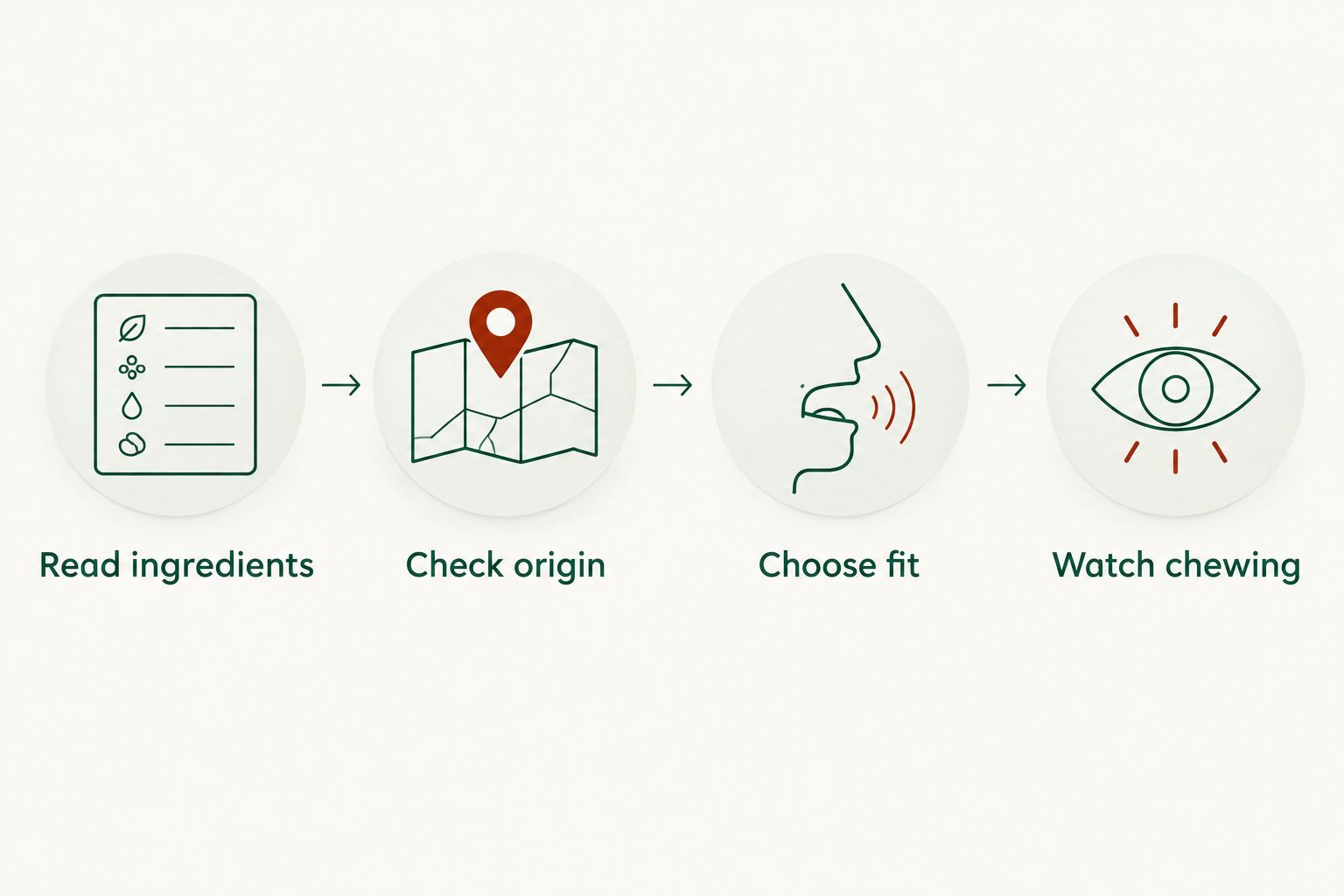
Before buying: check the label, origin and fit
Use this buying sequence for any natural dog chew in 2026. It separates a simple ingredient claim from the practical work of choosing a suitable piece.
- Read ingredients. Find the full ingredient statement. Confirm that it matches your goal of avoiding added flavors.
- Check origin. Ask where the animal material comes from and where the finished chew is prepared.
- Choose fit. Assess the complete piece against your dog's mouth and swallowing behavior.
- Watch chewing. Stay present and remove the chew when its condition or your dog's behavior makes continued use unsuitable.
For origin questions, use the dog chews made in USA sourcing guide. Keep “made here” and “animal raised here” as separate questions until both are answered.
Length is information, not permission
The Ultimate Sample Bundle description lists Hair-On Hide Roll lengths of 12 inches, 8 inches and 4 inches. Those measurements describe the included formats; they are not dog-weight recommendations or guarantees that a particular piece suits your dog.
Measure your decision against swallowing behavior, not just the product's starting length. Reassess throughout use because a chew does not stay the same size or condition.
Supervision means more than being in the house
Stay close enough to notice a dog trying to swallow a large section, breaking off unsuitable pieces or showing mouth discomfort. Put the chew away when you cannot watch. Do not leave it as an unattended distraction.
- Separate dogs during chewing to reduce competition over the item.
- Wash your hands after handling animal-derived chews.
- Clean surfaces that contact the chew.
- Follow the product's handling and storage instructions.
- Ask your veterinarian before offering chews to a dog with dental disease, swallowing problems or a relevant medical history.
Choking or breathing difficulty needs emergency veterinary care. Suspected swallowing of an unsuitable piece, repeated vomiting or other concerning symptoms also calls for prompt veterinary advice—not another chew to see what happens.
How these options are ranked
This 2026 ranking prioritizes ingredient clarity, disclosed preparation and a distinct reason to choose each format. It does not rank chewing duration, digestibility or dental performance because those outcomes are not established by the product information used here.
Whole hide comes first because it matches the central buying preference: a plainly identified animal material without added flavors. Thin hide addresses format preference; bully sticks address avoiding hide; collagen chews require recipe-level review.
Which natural dog chew should you choose?
Start with Hair-On Hide Rolls if you want the clearest whole-hide option described here. Choose Thin Hides only when thinner rolls are your intended format, not as a shortcut around supervision.
Choose a single-ingredient bully stick if avoiding hide matters more than choosing whole hide. Hold on collagen chews until the recipe answers your questions. No ingredient list makes poor sizing or gulping acceptable.
FAQ
What are the best natural dog chews without added flavors?
Hair-On Hide Rolls are the top whole-hide choice in this guide because their description states whole beef hide, hair rolled inside and nothing else. Single-ingredient bully sticks are an alternative for owners avoiding hide. Both require appropriate sizing and supervision.
Does natural mean a dog chew is safe?
No. Natural dog chews can still present choking, blockage, dental and bacterial risks. Ingredient simplicity does not remove the need for careful selection, handling and supervision.
Are Thin Hides safer than thicker hide rolls?
Thickness alone does not establish safety. Choose Thin Hides for their thinner format, then assess the piece against your dog's mouth size and chewing behavior.
Are Uglychews dog chews made in the USA?
Uglychews makes its chews in Wyoming. Preparation location does not independently establish where the cattle were raised, so ask separately about the origin of the hide.
Are unflavored collagen chews always single ingredient?
No. Unflavored does not establish that a product contains only one ingredient. Read the full recipe before deciding whether a collagen chew meets your preferences.
Can I leave my dog alone with a natural chew?
Do not leave your dog unattended with an edible chew. Stay close enough to observe chewing behavior and remove the item when its size, condition or your dog's behavior becomes unsuitable.
Are freeze-dried liver treats a substitute for a hide chew?
Freeze-dried liver treats belong in a treat comparison, not as an equivalent whole-hide chew. Choose them for the treat format rather than assuming they provide the same chewing experience.
One last thing
The piece your dog leaves behind deserves as much attention as the piece you bought. An appropriate starting size does not make the remaining end appropriate. Watch the chew change, and remove it before your dog treats the remainder like something to swallow whole.


