

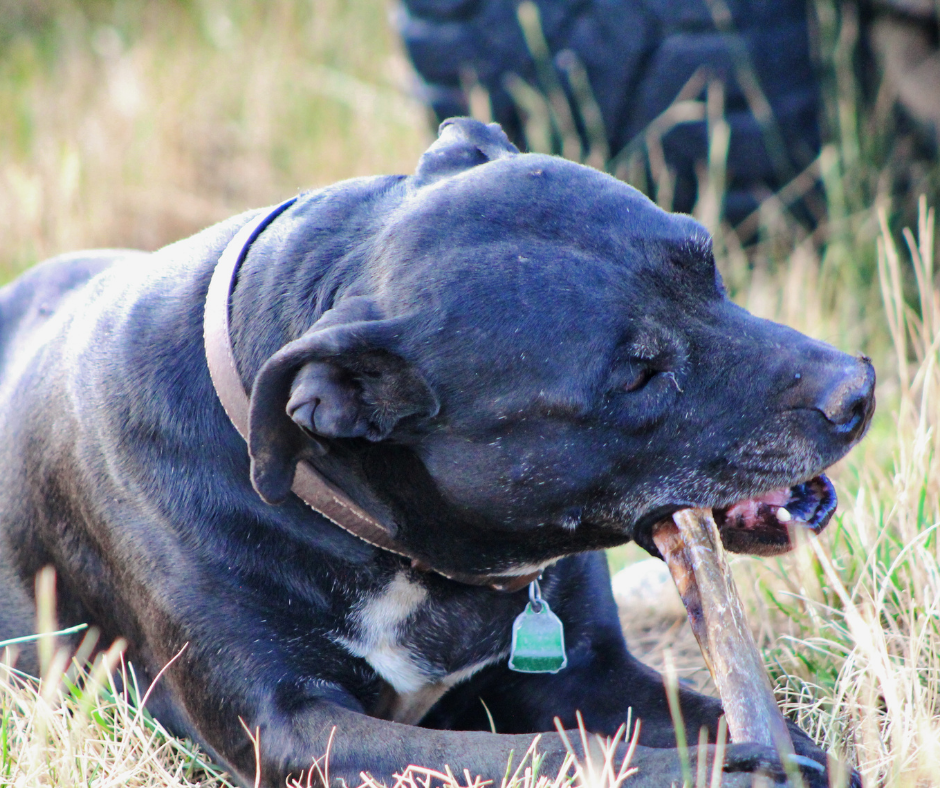
A chew that's the wrong size is a common reason dogs hurt themselves on a supposedly safe treat. Picking the right chew size for dogs really matters. Owners don't get warned about it because the industry standard is vague. Companies just slap "Small / Medium / Large" on the bag and call it done.
That's not enough information.
Here's how to actually size a chew for your dog.
The rule of thumb for choosing chew size for dogs
A chew should be at least 50% longer than the width of your dog's mouth at the back molars. That's the dimension that matters, not weight class, not breed.
For most dogs, that means:
- Small dogs (under 25 lbs): chew length of at least 4-5 inches, thick enough they can't swallow it whole
- Medium dogs (25-60 lbs): chew length of at least 5-7 inches
- Large dogs (60-90 lbs): chew length of at least 7-12 inches
- XL / power chewers (90+ lbs): chew length of 9+ inches with substantial thickness
If your dog can pick up the whole chew and walk around with it, it's too small.
Why too small is dangerous
When a chew is small enough to be fully inside the mouth, dogs stop chewing it. They start trying to swallow it whole, or they get it lodged sideways across the back of the throat. Both outcomes can be emergencies.
This is especially common with confident eaters like Labradors, Goldens, Pits, Boxers. They'll process a "medium" chew like it's a snack instead of an enrichment activity.
Why too big can also be a problem
A chew that's wildly oversized creates a different issue. Dogs can't get their teeth around it the right way. They start gnawing from awkward angles, which puts pressure on the wrong teeth. This increases the risk of slab fractures on the carnassial tooth, the big upper one in the back. Slab fractures are the most common chew-related dental injury.
A chew that's appropriately sized invites a normal chewing motion. This means front teeth and side teeth doing the work, back molars grinding.
Power chewers are their own category
If your dog has destroyed a Kong, broken a Nylabone, or finished an antler quickly, they're a power chewer. Breed or size does not matter. Power chewers need thicker hides, not just longer ones. Thickness makes a chew last and protects teeth from over-aggressive bite force. We get deeper into this in our aggressive chewer guide.
What about puppies?
Puppies should get smaller, thinner chews — but they still need length so they can't swallow them whole. The Thins are sized for puppies and small adults.
Avoid anything weight-bearing or rock-hard for puppies under 6 months. Their teeth are still developing and they're more prone to fractures.
Try a few and see
The honest answer is that every dog is different. A 70-pound Husky who chews lazily is very different from a 50-pound Pit. Some Pits eat hides like they're potato chips.
The Sample Bundle is built for exactly this. You get a range of sizes and formats. You see what your dog actually engages with and reorder the right thing.
If you already know your dog is a power chewer, start with the Hair-On Hide Rolls.
FAQ
Can a chew be too small for my dog?
Yes. If your dog can fit the whole chew inside their mouth, they'll likely try to swallow it whole. That creates a choking and obstruction risk.
Can a chew be too big for my dog?
Yes. Oversized chews encourage awkward biting angles that can fracture back teeth. The chew should be challenging but not impossible to grip.
What size chew should a puppy have?
Puppies need chews long enough not to be swallowed but thin enough that their developing teeth can manage them. Our Thins are designed for this.


