

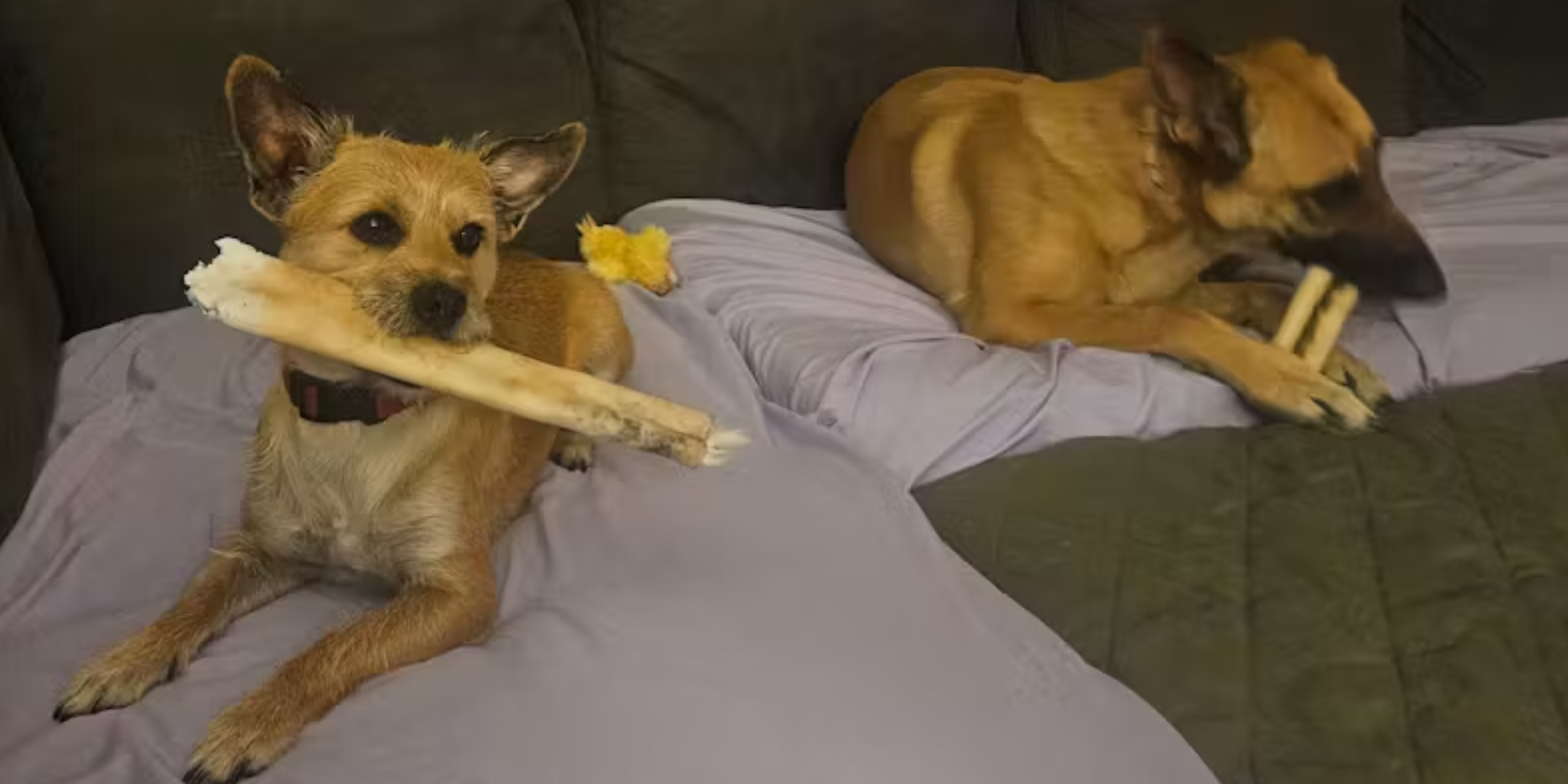
Most chew-related vet visits don't happen because someone bought the wrong chew, but because basic dog chew safety gets overlooked. They happen because the right chew got too small and nobody noticed.
Here's how to know when to take it away.
Sign #1: It fits entirely in the mouth
The single most important rule of chew safety: if your dog can fit the whole chew inside their closed mouth, it's done. Take it.
This is the moment a chew transitions from "thing they're chewing on" to "thing they might swallow whole." Swallowed-whole chews are choking emergencies, esophageal obstruction emergencies, and intestinal obstruction emergencies, usually in that order.
The frustrating part is this happens fast. A chew can go from "looks fine" to "small enough" in a single chewing session. Don't trust visual size from across the room. Pick the chew up and check.
We covered chew sizing in detail in our size guide. Same rule applies in reverse: if you wouldn't buy a chew that small for your dog, don't let them keep chewing one that's gotten that small.
Sign #2: It's splintered or cracked
Hard chews, antlers, bones, and plastic can crack along the grain and create sharp edges. These cause oral lacerations, punctured palates, and (in the worst cases) perforated intestines.
Natural hide chews don't usually splinter, which is one of their safety advantages. But if you see sharp edges on any chew, the chew is done.
(This is one of several reasons we don't sell antlers, bones, or hooves. We wrote about the harder issues in our aggressive chewer guide.)
Sign #3: Your dog isn't really chewing anymore
If the chew is small enough to carry around and your dog is mostly just holding it, walking with it, or trying to swallow chunks rather than work them down, it's time. The chew has stopped doing its job (enrichment, dental scrubbing, jaw work) and started being a swallowing target.
How long should a chew last for dog chew safety?
This depends more on your dog than on the chew. For most dogs, a natural hide chew lasts:
- 20-40 minutes per session for moderate chewers
- 30-60 minutes per session for aggressive chewers
- Multiple sessions across a few days for gentle chewers
Take the chew away between sessions and store it somewhere your dog can't reach. This keeps it appealing (dogs lose interest in 24/7 access) and keeps you in control of when it's safe.
What to do when the chew is done
Don't throw a partially eaten chew in the regular trash where your dog can dig it back out. Toss it in something they can't access.
For chews that have gotten small but aren't dangerously small yet, the right move is "trade up", swap the small chew for a fresh, full-size one. Most dogs will accept the trade happily.
FAQ
When should I take my dog's chew away?
As soon as it's small enough to fit entirely in their mouth. That's the threshold where a chew becomes a choking risk.
How long should a dog chew last?
20-40 minutes per session for most dogs, 30-60 minutes for aggressive chewers. The chew should still be substantial at the end of a session, not whittled down to a swallowable nub.
Are natural hide chews safer than rawhide?
Yes for several reasons we covered in our rawhide post, but the size and supervision rules still apply to any chew.
Try chews built for safety from the start
Every Ugly Chew is single-ingredient, just beef hide, no chemicals, no glue, no fillers. Sizes are designed to last through normal chewing sessions without getting dangerously small too fast.
For aggressive chewers, the Hair-On Hide Rolls are sized to give you a longer safe-chew window.


