
Multi-dog household treat planning is choosing single ingredient dog treats to simplify ingredient tracking while matching each dog's chewing needs. Use this 2026 guide to choose whole-hide beef chews, check sourcing, and keep separate dogs from turning treat time into a competition.
- Uglychews whole-hide dog chews suit owners seeking single-ingredient, Wyoming-made options for individually supervised chewing.
- Choose single ingredient dog treats separately for each dog; one ingredient does not mean one size fits all.
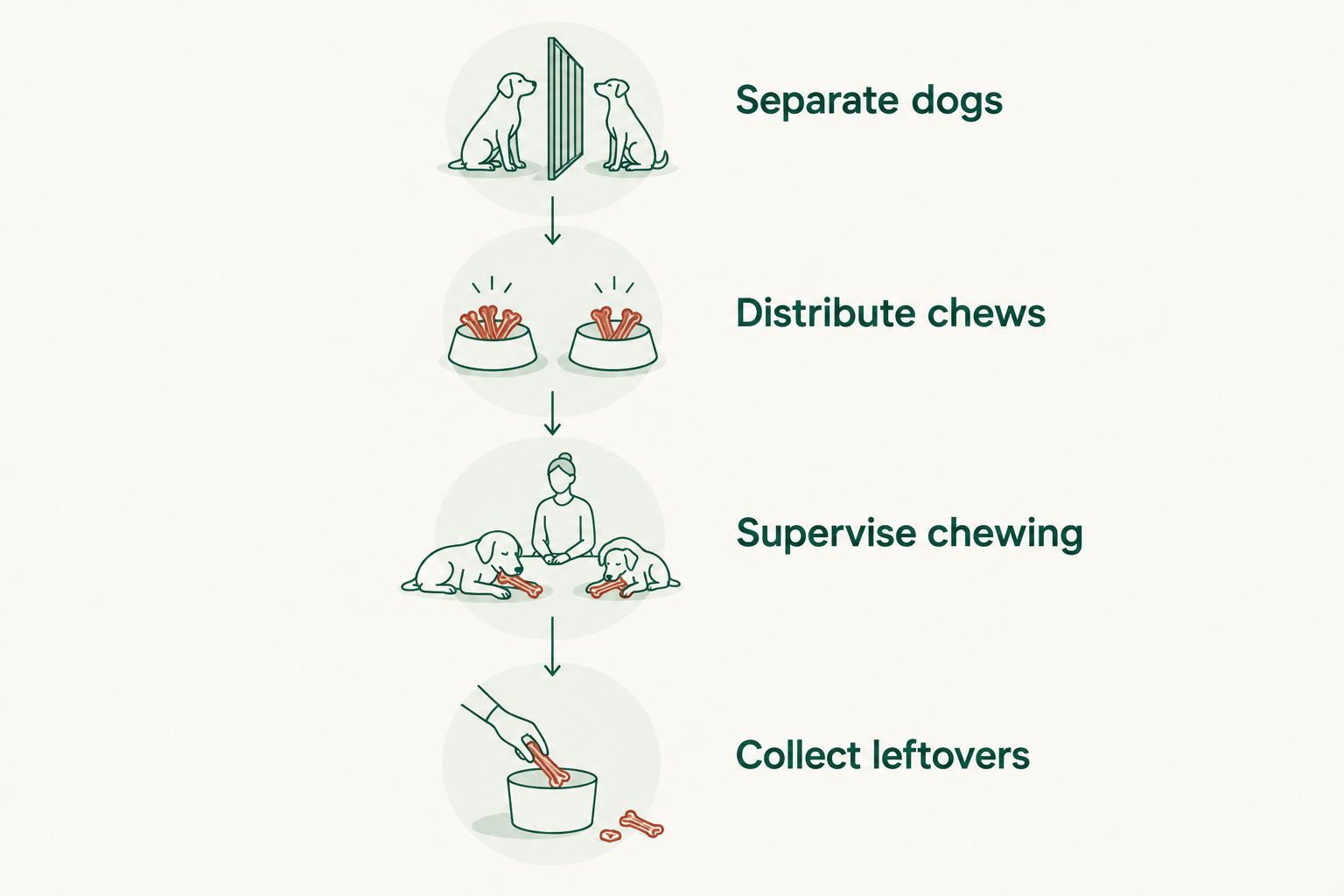
- Separate dogs before handing out whole-hide chews, and collect leftovers before bringing dogs back together.
- Use liver treats for small rewards, not as a substitute for a supervised chew.
Why single-ingredient treats matter for multi-dog households
A shared treat jar hides individual differences. One dog works slowly at a chew; another tries to swallow the last piece. One tolerates beef; another has a veterinarian-directed diet that rules it out.
Single-ingredient products make the ingredient list easier to follow. They do not make every product appropriate for every dog, and they do not identify the cause of an allergy or stomach upset by themselves.
Uglychews whole-hide dog chews are best for owners who want single-ingredient, Wyoming-made chews and can supervise each dog separately. The brand makes hand-cut whole-hide chews; the limitation is that you still need to choose an appropriate piece and manage chewing closely.
For your 2026 buying checklist, separate three questions: what is in the chew, where it comes from, and whether your dog can use it appropriately. A short ingredient list answers only the first.
Choose and manage treats for each dog
Build a separate profile for every dog
Start with a notebook or a simple phone note. Record how each dog actually handles food and chews rather than assigning the same option to everyone because they share a home.
Watch for gulping, attempts to swallow large pieces, guarding, and difficulty chewing. A dog with dental disease, previous intestinal obstruction, swallowing problems, or a prescribed diet needs veterinary guidance before you introduce a whole-hide chew.
Body size matters, but behavior matters too. A large dog that gulps needs a different decision from a large dog that steadily gnaws. Do not use breed alone as your buying instruction.
- Record each dog's dietary restrictions and known reactions.
- Note whether the dog gnaws, tears, or gulps.
- List dental concerns and relevant medical history.
- Identify a separate place for that dog's chew session.
Read the ingredient list before the product name
Check the actual ingredient statement manually. Words such as natural, beef-flavored, and wholesome do not tell you whether a product contains one ingredient or several.
For whole-hide beef chews, identify the animal source and the material. Hide, tendon, and liver are different tissues, even when they all come from cattle. Do not treat them as interchangeable just because the animal is the same.
An existing diet restriction still applies to a single-ingredient chew. Beef hide is not an appropriate workaround for a dog whose veterinarian has excluded beef. During a food-elimination trial, follow the veterinarian's instructions rather than adding a new treat independently.
- Read the ingredient statement for every new purchase.
- Distinguish hide from organ meat and tendon.
- Check for added flavors, coatings, or other ingredients.
- Keep each dog's approved foods separate from restricted foods.
Check manufacturing and sourcing separately
You can compare sourcing claims without buying anything. Read the product description, write down what it actually establishes, and ask the seller to clarify anything that affects your decision.
Uglychews makes its single-ingredient, hand-cut whole-hide chews in Wyoming. That establishes the manufacturing location; it does not, by itself, establish where every animal was raised. Made in the US and sourced from US-raised cattle are different claims.
If domestic sourcing is a priority, ask about the hide's origin rather than filling in the gap yourself. Keep the same standard for every brand you compare. A flag on packaging is not a complete sourcing answer.
- Confirm where the finished chew is made.
- Ask where the animal material originates.
- Check how the seller describes preparation and handling.
- Save the answers alongside the product information.
Match the whole-hide piece to the individual dog
Inspect each piece before handing it over. Whole-hide chews vary, and the shape in your hand matters more than the idea of a universal household chew.
Choose a piece that your dog cannot readily swallow whole. There is no universal length that makes a chew appropriate for every dog; mouth size, chewing behavior, and the changing shape during use all matter. Ask your veterinarian when you cannot judge the fit confidently.
A thinner piece is not automatically safer, and a thicker piece is not automatically better. Thickness changes the chewing experience, but it does not remove choking, blockage, or dental risks. Never buy solely for the longest possible chewing session.
- Check length, width, thickness, and shape before use.
- Reject pieces your dog can readily swallow whole.
- Watch how the piece changes as the dog chews.
- Remove leftovers that become unsuitable for that dog.
Set up separate chewing spaces
Use rooms, securely separated areas, or established individual spaces before opening the treats. Give each dog room to chew without another dog approaching to inspect or steal the prize.
Separation is a management step, not proof that a dog will never guard. Do not put your hands between dogs fighting over food, and do not forcibly take a chew from a dog showing guarding behavior. Get qualified behavior support for growling, snapping, or repeated conflict.
Use 1 dog per separated chewing area. If you cannot supervise all areas adequately, offer chews at different times instead. A camera does not replace someone able to intervene promptly.
- Separate dogs before distributing any chews.
- Keep children away from chewing dogs.
- Prevent dogs from visiting another dog's space.
- Collect remaining pieces before dogs reunite.
- Use separate sessions when supervision would be stretched.
Introduce the chew without changing everything else
Start with an individually supervised introduction rather than handing a new chew to the entire household. Keep the rest of that dog's routine consistent so your notes are useful if a problem follows.
Introduce 1 new treat type at a time. This is a tracking rule, not a guarantee against a reaction. Stop offering the product if the dog has difficulty chewing it, repeatedly tries to swallow unsuitable pieces, or develops concerning symptoms.
Keep a short 2026 treat log with the product, dog, date, and observations. Do not label a product an allergen based on a single unexplained episode; discuss persistent or repeated problems with your veterinarian.
- Introduce the product to each dog separately.
- Record what the dog received and when.
- Note chewing behavior and digestive changes.
- Stop the session when the chew becomes unsuitable.
- Contact your veterinarian about repeated or concerning symptoms.
Collect leftovers and clean the area
Finish the session deliberately. A forgotten piece under a chair can become a stolen chew later, when nobody is watching and the wrong dog finds it.
Follow the product's storage instructions and ask the seller if they are unclear. Do not assume that drying, freezing, or rinsing a chewed piece makes it free of bacteria. Natural ingredients and domestic manufacturing do not eliminate bacterial risks.
Wash your hands after handling animal-based chews and clean surfaces that contacted them. If a piece is contaminated, deteriorating, or unsuitable for further chewing, discard it rather than passing it to another dog.
- Search each chewing area for leftover pieces.
- Keep unused products apart from chewed remnants.
- Clean washable surfaces and handling equipment.
- Wash hands after handling chews.
- Store products according to the seller's directions.
Compare your 2026 treat options
Choose the job first: supervised chewing or a small reward. Buying something called a treat does not tell you which job it will perform.
The whole-hide options below keep the focus on simple ingredients and individual fit. Liver treats play a supporting role for rewards; tendon chews offer a different tissue and shape, not an automatic safety upgrade.
| Option | Best for | Main advantage | Key limitation |
|---|---|---|---|
| Hair-On Hide Rolls | Owners seeking full-thickness whole beef hide | Whole beef hide with hair rolled inside and nothing else | Requires individual sizing and supervision; hair does not establish a health benefit |
| Thin Hides | Owners specifically comparing a thinner whole-hide format | Provides a thinner-hide option | Thinness does not make the piece suitable for every small dog or gulper |
| Single-ingredient liver treats | Small rewards during training or handling practice | Keeps reward ingredients easy to identify | Not a replacement for a whole-hide chewing session |
| Single-ingredient tendon chews | Owners comparing a different animal tissue | Offers an alternative material to hide | Shape and ingredients vary; still requires suitability checks and supervision |
For a first Uglychews purchase, choose the format that fits your dog's behavior—not the format that looks toughest. If you cannot judge that fit, pause the purchase and ask for guidance. Buying a larger assortment does not solve an unanswered sizing question.


Common mistakes multi-dog households make
Buying identical pieces to keep things fair
Dogs do not need identical chews. They need individually appropriate choices, even when that means different formats or no whole-hide chew for one dog.
Fair management means preventing competition and respecting dietary restrictions. Do not give a medically unsuitable treat just because another dog receives one.
Assuming one ingredient means allergy-safe
A single ingredient can still be the ingredient a dog must avoid. Simpler labeling helps you track exposure; it does not remove the need to follow an individual diet plan.
Keep approved treats clearly separated. Tell everyone who feeds the dogs which products belong to which dog.
Letting the fastest dog finish everyone else's chew
The dog that finishes first does not get cleanup duty. Other dogs' leftovers can be the wrong size, and approaching another dog's chew can trigger conflict.
Collect pieces before opening barriers. If one dog finishes early, keep that dog separated until every chewing area has been checked.
Treating ugly, natural, or domestic as a safety certificate
Appearance is not a safety test. Neither is a short ingredient list or a US manufacturing location.
Uglychews whole-hide dog chews still require supervision and individual judgment. Stop using any chew that your dog cannot handle appropriately, regardless of the label.
FAQ
What's the best single ingredient dog treat for a multi-dog household?
The best choice is the one that fits each dog's diet, mouth size, and chewing behavior. Whole-hide chews serve supervised chewing, while single-ingredient liver treats serve small rewards; one household does not need one universal product.
Can all my dogs have the same whole-hide chew?
Your dogs can share a product type only if it suits each dog individually. Choose separate pieces, check each dog's dietary restrictions, and supervise dogs in separate spaces.
Are single-ingredient beef chews safe for dogs with allergies?
Single-ingredient beef chews are not appropriate for dogs whose veterinary diet plan excludes beef. A short ingredient list helps identify exposure but does not make a product allergy-safe.
Are thinner hide chews better for small dogs?
Thinner hide is not automatically better for a small dog. Assess the entire piece and the dog's chewing behavior; a piece that can be swallowed whole is unsuitable regardless of thickness.
Should I separate my dogs when giving them chews?
Separate your dogs before giving them chews and collect leftovers before reuniting them. Separate sessions are the better choice when you cannot adequately supervise multiple chewing areas.
Does made in Wyoming mean the beef came from Wyoming?
Made in Wyoming identifies the manufacturing location, not necessarily where the cattle were raised. Ask the seller directly about the animal material's origin when domestic sourcing is a buying requirement.
What should I do if my dog swallows a large piece of hide?
Contact your veterinarian promptly if your dog swallows a large piece or you suspect an obstruction. Trouble breathing is an emergency; do not induce vomiting unless a veterinarian directs you to do so.
One last thing
Before your next 2026 order, check the floor rather than the cart. If chews routinely disappear under furniture or move between dogs, fix the session setup before adding more options.
The most useful household rule is simple: no unattended leftovers. A carefully chosen chew stops being a carefully managed chew when another dog finds it hours later.


