

Every dog parent wants to keep their furred friend happy, calm, and occupied. Chewing is an instinct that provides massive stress relief. However, many owners unknowingly risk their pet's health with traditional treats. In this article, we will unpack the core health risks of commercial treats and explore if is rawhide bad for dogs. You will discover what makes these chews dangerous and how to select safer, premium choices.
Understanding Rawhide: What Is It Made Of?
To get a sense of what the experts are worried about, let’s look at how these products are made. Traditional rawhide is not a simple dehydrated meat treat. Instead, it is a byproduct of the global leather industry.
The production process involves taking the inner split layer of animal skins, mostly from cattle. In factory processing, they are subjected to heavy doses of chemicals to avoid decay during transport.
The hides are treated with powerful brines made up of chemicals. They are then cleaned and whitened using hydrogen peroxide. After this, artificial glue, artificial colors, and artificial flavors are added to make attractive bones or sticks. This heavy industrial manipulation strips away any actual nutritional value, leaving behind a highly synthetic material.
Why Is Rawhide Bad for Dogs?
When pet owners ask why is rawhide bad for dogs, veterinarians usually point to three critical health threats that can result in emergency room visits.
1. Serious choking hazards and digestive tract obstacles
Traditional rawhide is very tough when dry but softens as a dog chews. Aggressive chewers will rip off big, rubbery chunks and swallow them whole. The pieces swell considerably within the digestive tract. It is difficult to digest and can lead to possible life-threatening blockages in the stomach or intestines. These blockages are not removable by themselves but need emergency surgery to be done in order to save the life of the dog.
2. Toxic Chemical Contamination and Residues
The trace residual chemicals from the manufacturing process pose chronic health risks. Formaldehyde, arsenic compounds, and toxic glues are often used by foreign factories to shape products. Eating these hidden residues on a regular basis can irritate your dog’s stomach lining and cause chemical sensitivities, as well as allow dangerous toxins to enter the internal systems.
3. Acute digestive irritation and gastrointestinal distress
Dogs' digestive systems are extremely fragile and prone to damage from anything. Dogs' stomach acids cannot break down the harmful chemicals and artificial coloring found in factory-made leather chews. The undigested debris becomes trapped in the digestive tract, causing bloating, diarrhea, vomiting, and abdominal pain. Eventually, this painful obstruction will cause loss of appetite in your dog.
Is Beef Hide Bad for Dogs Too?
Many consumers feel confused when they see labels shifting from "rawhide" to "beef hide" or "cowhide". Is it common to wonder, is beef hide bad for dogs just like the standard options?
The reality comes down to sourcing and transparency. Technically, any skin from a cow can be broadly classified under the hide category. However, mass-produced beef hide bones sold in major retail chains undergo the same chemical bleaching, splitting, and artificial coloring steps as traditional rawhide.
If it is uniformly pure white and has no smell, it has probably been treated with industrial chemicals. On the flipside, a premium, unbleached, single-ingredient beef hide chew is much easier on your dog’s stomach to digest gradually while maintaining its natural durability.
|
Feature |
Traditional Industrial Rawhide |
Premium Whole Beef Hide |
|
Sourcing |
Leather industry byproduct |
Fresh from local ranches/butchers |
|
Processing |
Bleached, split, glued |
Washed with water, sun-dried |
|
Digestibility |
Highly indigestible; expands |
Softens naturally when chewed |
|
Chemical Additives |
Formaldehyde, bleach, dyes |
100% additive and chemical-free |
Why Ugly Chews Are Chewer-Safe and Vet-Approved
Thankfully, you do not have to give up on the dental and mental benefits of a long-lasting chew. The team at Ugly Chews completely rejects the shortcuts of factory processing. Instead of utilizing thin, split scraps from leather factories, they source whole, unbleached hides directly from local American ranches.
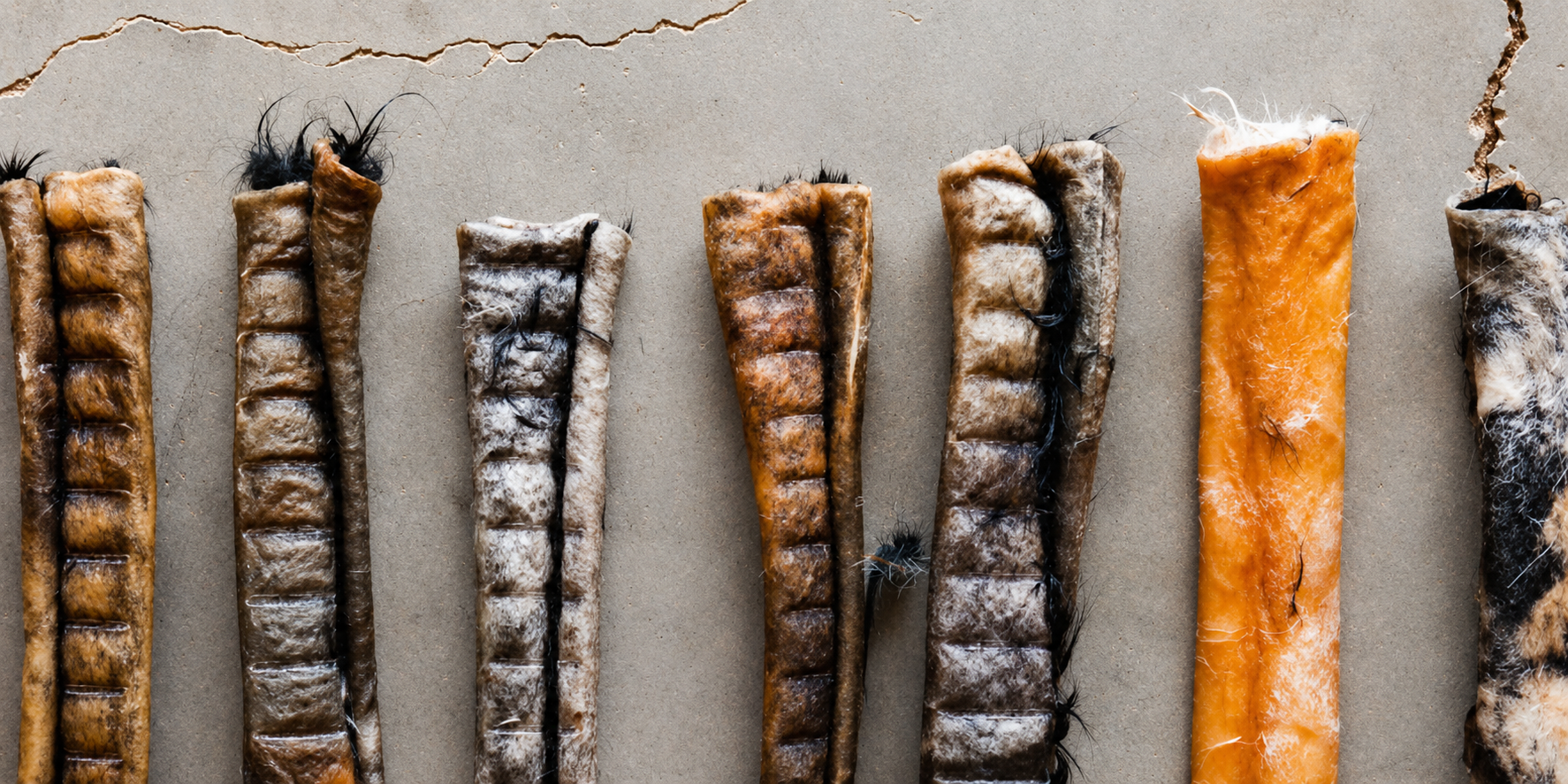
The hides are only cleaned with water and then air-dried under the sun, resulting in an exceptionally durable product. No parts of the hide are cut away, meaning the chew is going to get softer while your dog chews on it, without any danger of getting splinters or sharp edges. They even keep the natural hair on many of their options, which acts as a fantastic source of dietary fiber to sweep clean the digestive tract.
Safe Feeding Practices Every Dog Owner Should Follow
No matter how high the quality of your dog's treat, responsible management is necessary to avoid accidents.
-
Continuous Supervision: Always watch your pet carefully during a chew session.
-
Size Matching: Make sure that the size of the product is appropriate for your particular breed so that it will be impossible to swallow.
-
On-Time Removal: Take the chew away when it gets too small and can be swallowed.
-
Access to Fresh Water: Always have a fresh water bowl close to help with hydration and swallowing.
Conclusion
Understanding why is rawhide bad for dogs helps you shield your pet from potentially harmful chemicals or even blockages within the body. Your pet should enjoy a natural, healthy treat in accordance with their instinctual nature.
If you want clean-ingredient chews for your pup, then consider getting some from Ugly Chews, which use unbleached, 1-ingredient, straight-from-the-source products.
In case you want more customized information on this matter, feel free to provide me with information on the breed, age of your dog, or their type of chewing.
FAQs:
Is rawhide bones bad for dogs if they chew slowly?
Yes, even a slow chewer is at risk of being harmed by chemicals in the bones or getting a bone blockage if the small parts are ingested.
How bad is rawhide for dogs compared to bully sticks?
Certainly, rawhide is much more dangerous since it is processed with industrial chemicals and is not digestible, while bully sticks are made from 100 percent digestible muscle meat.
Why rawhide is bad for dogs but okay for some wild animals?
While dogs get processed and bleached leather products, wild animals eat natural and untreated hides.
What are the symptoms of a rawhide blockage?
Look out for persistent vomiting, constant gagging, abdominal pain or swelling, lethargy, and loss of appetite.
Can puppies safely enjoy natural unbleached hides?
Yes, younger dogs can enjoy softer, thinner varieties of natural unbleached hides, provided they are always carefully supervised during the session.


