

Best overall: Hair-On Hide Rolls. Best for choosing a thinner hide: Thin Hides. Best for comparing sizes and textures: Ultimate Sample Bundle. For whole hide dog chews for new owners in 2026, start with a clear ingredient list and an appropriate size—not a promise that a chew is indestructible.
- Uglychews whole hide dog chews suit owners seeking single-ingredient, hand-cut chews made in Wyoming.
- Hair-On Hide Rolls are the default pick; Thin Hides offer a thinner alternative.
- Ultimate Sample Bundle includes several roll lengths, but every piece still needs an individual fit check.
- Supervise every session. Natural ingredients do not eliminate choking, blockage, dental, or bacterial risks.
Why this matters
Buying your first chew means making two decisions: what goes into your dog and how your dog handles it. A short ingredient list answers the first question. Watching your dog chew answers the second.
Uglychews makes single-ingredient, hand-cut whole-hide dog chews in Wyoming. That gives you a concrete manufacturing detail, not permission to skip supervision. For sourcing questions, read the guide to whether US packing means US sourcing before treating those claims as interchangeable.
The best first purchase is a chew you can evaluate—not the biggest assortment you can order. Use this 2026 guide to narrow the format, then check your dog's mouth size, chewing behavior, and health needs.
What makes the best whole hide dog chews for new owners?
These criteria put practical buying decisions ahead of toughness claims:
- Clear ingredients: Know which animal ingredient you are buying. Single-ingredient beef hide still matters if your dog must avoid beef.
- Specific sourcing information: Separate where a chew is made from where its raw material originates. Ask direct questions when origin matters to you.
- Appropriate size and shape: Choose a piece your dog cannot swallow whole. Length alone does not settle the question; width, thickness, and behavior matter too.
- A useful first format: Pick a straightforward roll, a thinner option, or a comparison bundle for a reason—not because more pieces sound better.
- Manageable supervision: Choose a chew you can inspect and remove. No format belongs in an unattended first trial.
There is no universal winner for every dog. A careful chewer and a dog that tears off and gulps chunks need different decisions, even when they weigh the same.
Whole-hide picks at a glance
The order below favors a clear starting point, then a thinner alternative, then a way to compare formats. It is not a ranking of guaranteed chew time.
| Pick | Best for | Standout detail | Key limitation |
|---|---|---|---|
| Hair-On Hide Rolls | A straightforward first whole-hide purchase | Full-thickness beef hide with the hair rolled inside | Full thickness does not establish a safe fit for every dog |
| Thin Hides | Owners specifically seeking a thinner hide | Made from rolls that dry thinner than anticipated | Thin does not mean swallow-safe or suitable for dental problems |
| Ultimate Sample Bundle | Comparing roll sizes and formats | Includes large, medium, and small Hair-On Hide Rolls plus a Thin Hide Roll | Every included piece needs a separate suitability check |
1. Hair-On Hide Rolls: best whole-hide starting point
Hair-On Hide Rolls are hand-cut from fresh, full-thickness cowhide, with the hair rolled inside. The ingredient description is plain: whole beef hide, nothing else.
That makes Hair-On Hide Rolls the clearest default for an owner who wants to understand the material before comparing several formats. Choose the size around your dog's mouth and behavior, not around an assumption that thicker automatically means better.
Hair-On Hide Rolls pros:
- The product identifies the ingredient as whole beef hide.
- Full-thickness cowhide provides a clearly described material.
- The hair is rolled inside rather than presented as an unexplained extra ingredient.
Hair-On Hide Rolls cons:
- Beef hide is not an appropriate choice when beef is excluded from your dog's diet.
- A full-thickness roll still presents choking, blockage, and dental risks.
Best for: Owners making a first whole-hide purchase who want a straightforward ingredient and format.
Check how your dog starts: steady gnawing is different from trying to force the entire roll into the mouth. If your dog attempts to swallow it whole or removes large pieces, stop the trial rather than waiting to see what happens.
Verdict: Buy Hair-On Hide Rolls as the default only after checking fit and suitability.
2. Thin Hides: best for choosing a thinner whole-hide option
Thin Hides come from rolls that dry thinner than anticipated during preparation. The useful distinction is thickness—not a promise of softness, easier digestion, or a particular session length.
Choose Thin Hides because you want to evaluate a thinner format. Do not choose Thin Hides as a workaround for sore teeth, missing teeth, or difficulty chewing without veterinary advice.
Thin Hides pros:
- The product gives you a thinner alternative to the full-thickness roll format.
- The description explains why these rolls are separated from other hides.
- Thin Hides let you focus a first purchase on one format rather than an assortment.
Thin Hides cons:
- A thinner piece is not automatically appropriate for a smaller dog.
- Thickness does not establish how quickly your dog will tear off or swallow pieces.
Best for: Owners who specifically want to assess a thinner hide and can watch the entire session.
Look at the actual piece before handing it over. If your dog can fit it wholly inside the mouth, or starts gulping sections instead of chewing, the thinner format has not solved the fit problem.
Verdict: Buy Thin Hides for a deliberate thinner-format trial—not as a safety shortcut.
3. Ultimate Sample Bundle: best for comparing sizes and formats
Ultimate Sample Bundle includes a large 12-inch Hair-On Hide Roll, a medium 8-inch roll, a small 4-inch roll, and a Thin Hide Roll. Those measurements describe included products; they are not a sizing prescription for your dog.
The bundle makes sense when you want to compare suitable options rather than commit to one format immediately. Introduce eligible pieces separately so you can tell which shape your dog handles well.
Ultimate Sample Bundle pros:
- Several roll lengths support a side-by-side size comparison before chewing.
- A Thin Hide Roll adds a different thickness to evaluate.
- The listed contents identify specific formats rather than just promising variety.
Ultimate Sample Bundle cons:
- Some included sizes will not suit every dog.
- An assortment requires more owner judgment than choosing one appropriate roll.
Best for: Owners prepared to sort the contents first and withhold unsuitable pieces.
Do not treat the 4-inch roll as a mandatory starting point, or the 12-inch roll as automatically appropriate for a large dog. Inspect the whole piece and consider your dog's swallowing behavior.
Verdict: Buy Ultimate Sample Bundle for comparison; skip it if you expect every included piece to fit.
Choose a format before filling your cart
For a first Uglychews purchase in 2026, narrow the decision to a full-thickness roll, a thinner hide, or a comparison bundle. More variety does not remove the need to inspect each piece.


Your first-session checklist for 2026
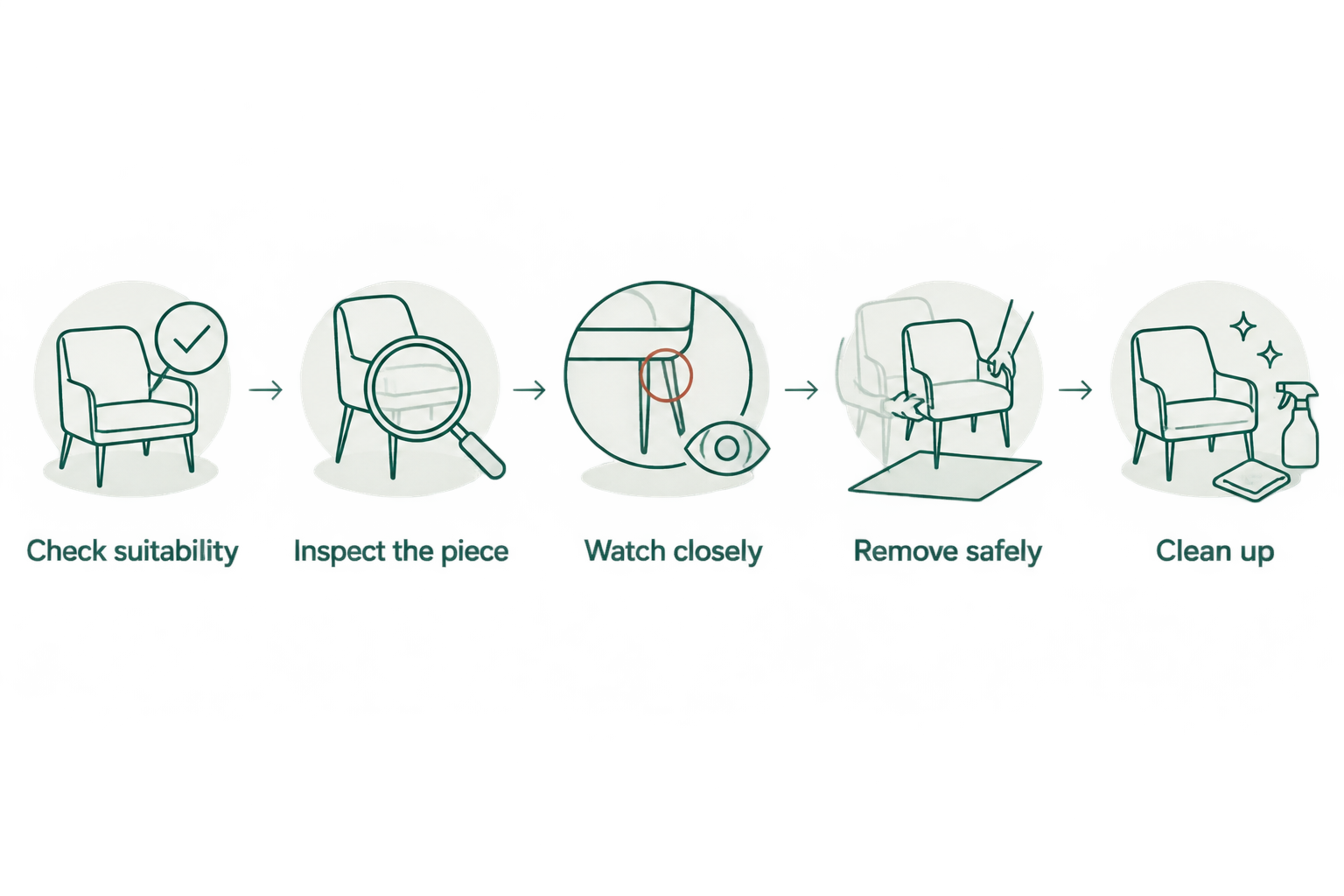
A first session is an observation session. Set up somewhere quiet, keep other pets separate, and stay close enough to notice changes and intervene safely.
- Check suitability: Ask your veterinarian first if your dog has dental disease, swallowing problems, a restricted diet, or a history of intestinal obstruction.
- Inspect the piece: Check the actual width, thickness, and length. Reject a piece your dog can swallow whole.
- Watch closely: Stay present and observe whether your dog gnaws, tears off chunks, or tries to gulp the chew.
- Remove safely: End the session when the remaining piece becomes swallowable or your dog starts removing concerning chunks. Use a practiced trade rather than reaching into a guarding dog's mouth.
- Clean up: Wash your hands and clean surfaces that contacted the chew. Keep animal-derived chews away from human food-preparation areas.
Supervision means watching the chewing—not simply being home. A dog can change tactics as a hide softens or becomes smaller, so the initial fit check is not the last check.
Trouble breathing is an emergency. Contact an emergency veterinarian immediately; repeated vomiting, abdominal pain, or distress after swallowing a piece also needs prompt veterinary attention.
Whole hide versus other chew types
Whole hide is one material choice, not a universal upgrade. When comparing categories in 2026, separate the ingredient question from the question of how your dog handles the object.
| Category | Best for | Practical advantage | Main limitation |
|---|---|---|---|
| Whole beef hide | Owners seeking a beef-hide chew | A single-ingredient product can keep the ingredient list simple | Swallowed pieces and chewing forces still create risks |
| Bully sticks | Owners choosing a different beef tissue | Offer a non-hide animal-derived option | Still beef; not a solution for a beef-restricted diet |
| Rubber chew toys | Owners seeking a non-edible chewing object | Provide an alternative to consuming an animal-derived chew | Torn-off pieces can become swallowed foreign material |
| Freeze-dried liver treats | Owners rewarding a behavior | Serve as food rewards rather than hide-chewing sessions | Not a replacement for a sustained chewing activity |
Each option has a job and a limitation. Choose the category that matches your purpose, then apply its own sizing, supervision, and feeding instructions.
Freeze Dried Liver Bites are supporting treats here, not a competing whole-hide recommendation. Keep your first whole-hide decision focused on the hide format your dog can handle appropriately.
How these whole-hide picks were ranked
This ranking prioritizes ingredient clarity, a useful first-purchase format, and the amount of sorting required before use. Hair-On Hide Rolls lead because the product description clearly identifies the material and construction; Thin Hides fill the thinner-format slot; Ultimate Sample Bundle serves comparison shoppers.
The ranking does not assign chew-time guarantees, digestibility scores, or a safety winner. Those claims would distract from the decision you actually need to make: which piece fits your dog and how your dog uses it.
Which whole-hide chew should you choose?
Choose Hair-On Hide Rolls if you want the simplest starting point among these options. Choose Thin Hides when a thinner format is your specific goal. Choose Ultimate Sample Bundle when you are comfortable sorting the contents and withholding pieces that do not fit.
Uglychews whole hide dog chews suit owners who want single-ingredient, hand-cut chews made in Wyoming. That is the buying case—not a claim that every dog needs hide or that natural materials remove risk.
If your dog habitually swallows large objects, has painful teeth, or guards chews, pause the purchase decision and get appropriate veterinary or behavior guidance first. Buying a thicker roll does not replace that conversation.
FAQ
What's the best whole hide dog chew for a first-time owner?
Hair-On Hide Rolls are the default pick in this guide for owners seeking a clearly described, single-ingredient whole-hide format. Choose an appropriate size and supervise every session; no roll suits every dog.
Are Thin Hides automatically better for small dogs?
No. Thin Hides describe thickness, not a guaranteed fit for small dogs. Check the actual piece against your dog's mouth size and swallowing behavior.
Does making dog chews in Wyoming mean the beef is US-sourced?
Manufacturing location and raw-material origin are different claims. Uglychews makes its chews in Wyoming; confirm the raw-material origin separately if US sourcing is a purchase requirement.
Are natural whole-hide chews risk-free?
No. Whole-hide chews can present choking, blockage, dental, and bacterial risks. Simple ingredients and US manufacturing do not eliminate those risks.
Can I leave my dog alone with a hide roll?
Do not leave your dog unattended with a hide roll. Watch for gulping, large detached pieces, and a remaining end small enough to swallow.
Should I give my dog every size in a sample bundle?
No. Evaluate each piece separately and withhold unsuitable sizes. Ultimate Sample Bundle includes several roll lengths, but inclusion in the box does not establish suitability for your dog.
Are freeze-dried liver treats a substitute for a whole-hide chew?
No. Freeze-dried liver treats serve as food rewards, while whole-hide chews serve a different chewing purpose. Choose the product type around the activity you want, not just the animal ingredient.
One last thing
The same chew can fit at the start and become unsuitable later. Recheck it throughout the session, especially after your dog has reduced its size or pulled sections loose.
For your first purchase in 2026, keep a short note about the format, your dog's behavior, and why you ended the session. That observation is more useful for your next order than guessing from the untouched chew in the bag.


