

Best whole-hide alternative: Hair-On Hide Rolls. Best for buyers specifically seeking cheek tissue: a clearly labeled, single-ingredient beef cheek roll. Best for comparing hide formats: Ultimate Sample Bundle. When shopping for beef cheek rolls for dogs, choose by ingredient identity, fit, and chewing behavior—not a promise of extra minutes.
- Beef cheek rolls for dogs and whole-hide rolls are not interchangeable product descriptions.
- Uglychews whole-hide dog chews suit owners seeking single-ingredient chews made in Wyoming.
- Hair-On Hide Rolls contain whole beef hide, with hair rolled inside and nothing else.
- No chew guarantees slower chewing or eliminates choking, blockage, dental, or bacterial risks.
Why this matters
A slower chew is a goal, not a product specification. Your dog determines whether a roll becomes a chewing project or something to tear apart and swallow.
The first distinction is the material. A product described as whole beef hide should not be presented as beef cheek simply because both come rolled. Uglychews makes whole-hide dog chews; the products compared here are not identified as beef cheek rolls.
For your 2026 shopping shortlist, separate ingredient origin from manufacturing location. Made in Wyoming answers where preparation happens; it does not, by itself, establish where cattle were raised. The guide to sourcing questions to ask before buying helps you keep those questions separate.
What makes the best beef cheek rolls for dogs?
Use these criteria before choosing a product. A familiar shape and a natural-looking label are not enough.
- Ingredient identity: Look for a direct statement of the animal and tissue. Do not assume cheek, hide, and other beef materials mean the same thing.
- Ingredient simplicity: Read the complete ingredient declaration, including coatings or added flavors. A short list helps you identify what you are feeding; it does not prove safety.
- Sourcing clarity: Ask where the animal material originates and where the chew is prepared. Treat those as separate answers.
- Individual fit: Consider the actual piece in relation to your dog's mouth, teeth, and behavior. Package size alone does not settle fit.
- Behavior under supervision: Watch whether your dog gnaws, tears off sections, or attempts to swallow the roll. Stop when the interaction becomes unsafe.
- Honest limitations: Reject guaranteed chew-time or risk-free language. No ingredient list removes the need for supervision.
These criteria guide the 2026 comparison below. The ranking assigns different buying jobs rather than pretending every option is the same material.
Beef cheek rolls and whole-hide alternatives at a glance
| Option | Best for | Standout detail | Key limitation |
|---|---|---|---|
| Hair-On Hide Rolls | Choosing a straightforward whole-hide alternative | Whole beef hide, hair rolled inside, nothing else | Not identified as beef cheek; no guaranteed chewing duration |
| Clearly labeled single-ingredient beef cheek roll | Buyers who specifically want cheek tissue | Ingredient identity matches the intended purchase when explicitly documented | Requires product-specific checks; this is a buying specification, not a tested brand pick |
| Ultimate Sample Bundle | Comparing different hide sizes and formats | Includes large, medium, and small Hair-On Hide Rolls plus a Thin Hide Roll | Every included piece still needs an individual fit check |
No option wins on proven chew time here. Choose the material you actually want, then judge the individual chew against your dog's behavior.
1. Hair-On Hide Rolls: best whole-hide alternative
Hair-On Hide Rolls contain whole beef hide with the hair rolled inside and nothing else. The product description identifies fresh, full-thickness cowhide cut by hand.
This is the clearest starting point if your real requirement is a simple-ingredient hide chew rather than cheek tissue specifically. Uglychews prepares its whole-hide chews in Wyoming, but that preparation location should not be stretched into an unsupported claim about livestock origin.
Hair-On Hide Rolls pros
- The ingredient description states whole beef hide and nothing else.
- Hair placement is explicit: rolled to the inside.
- Hand-cut, full-thickness hide is identified in the product description.
- The format lets you assess a roll rather than sorting through assorted scraps.
Hair-On Hide Rolls cons
- Whole beef hide is not an interchangeable label for beef cheek.
- Full thickness does not establish how long your individual dog will chew.
- A roll still presents choking, obstruction, dental, and bacterial risks.
Best for: Owners choosing their first whole-hide chew who value a direct ingredient description and Wyoming preparation.
Check the actual roll before handing it over. If your dog tries to gulp it, peels away large sections, or guards it so intensely that removal becomes unsafe, stop the session and reconsider the format.
Verdict: Buy if whole hide matches your goal and the individual roll fits your dog. Skip if you specifically require cheek tissue.
2. A clearly labeled beef cheek roll: best for cheek-specific buyers
If you want beef cheek rolls for dogs specifically, choose a product whose label actually identifies beef cheek. A rolled shape, beef illustration, or broad natural-chew description does not answer that question.
This recommendation is a purchasing specification, not an endorsement of an unnamed manufacturer's performance. Before ordering in 2026, confirm the complete ingredients, material origin, preparation location, and sizing guidance for the exact product.
Clearly labeled beef cheek roll pros
- An explicit tissue description answers the cheek-versus-hide question.
- A complete ingredient list lets you check for added flavors and coatings.
- Product-specific sizing information gives you something concrete to assess before purchase.
Clearly labeled beef cheek roll cons
- The category name alone establishes neither sourcing nor processing details.
- A cheek label does not guarantee digestibility, safety, or a slower session.
- You still need to evaluate the individual manufacturer and piece.
Best for: Owners whose purchase depends on getting cheek tissue rather than a different beef-based chew.
Ask direct questions when the description is vague. If the seller cannot identify the material or explain the ingredient declaration, choose a different listing instead of filling in the blanks yourself.
Verdict: Buy only after the exact product passes the ingredient, sourcing, and fit checks. Hold when the tissue description is unclear.
3. Ultimate Sample Bundle: best for comparing hide formats
Ultimate Sample Bundle includes a large 12-inch, medium 8-inch, and small 4-inch Hair-On Hide Roll, plus a Thin Hide Roll. Those dimensions describe included products—not a sizing prescription for your dog.
The bundle serves a different purpose from buying one preferred format repeatedly. You can inspect the options and offer only the pieces that suit your dog, rather than assuming every item belongs in the same dog's mouth.
Ultimate Sample Bundle pros
- Includes multiple identified Hair-On Hide Roll sizes.
- Adds a Thin Hide Roll for a different hide format.
- Lets you compare individual pieces before settling on a repeat purchase.
Ultimate Sample Bundle cons
- An assortment does not mean every included size is appropriate.
- Smaller pieces require their own swallowing-risk assessment.
- Multiple formats do not establish which will produce the slowest chewing.
Best for: Owners still deciding which whole-hide size or format makes sense for their dog.
For a first Uglychews purchase, choose this route only if you are willing to set unsuitable pieces aside. A bundle is not permission to work through every item regardless of fit.
Verdict: Buy for careful format comparison. Skip if you already know you need only one specific roll size.
The following cards show the two whole-hide options discussed above. Neither is presented as a beef cheek product.


How to introduce a chew without chasing the clock
Your 2026 buying decision should include a plan for the first session. Do not make a chew prove its value by leaving it with your dog until something goes wrong.
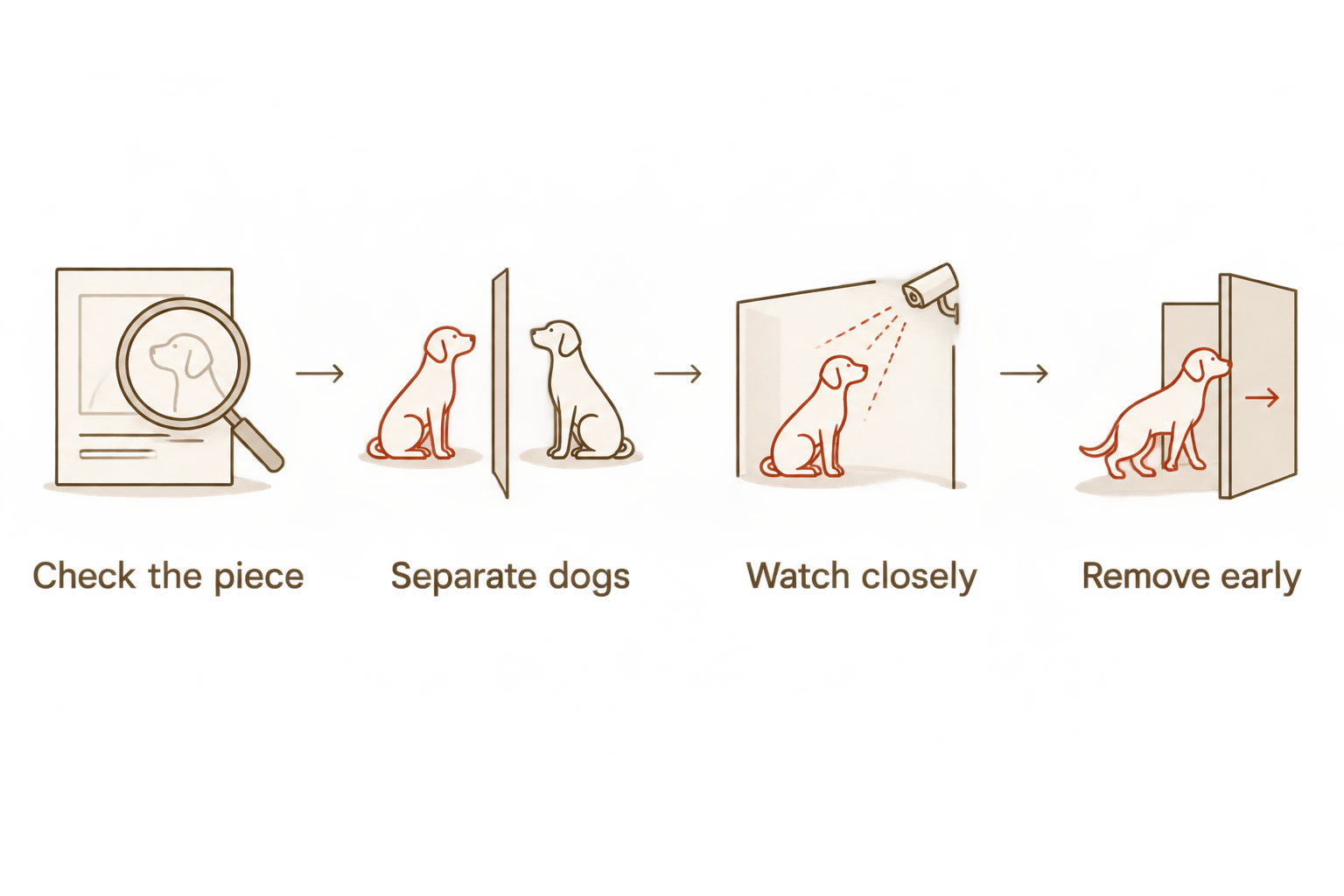
Check the piece
Inspect the individual chew before use. Compare its shape and size with your dog's mouth, and follow the manufacturer's instructions. Ask your veterinarian before introducing chews if your dog has damaged teeth, swallowing problems, dietary restrictions, or a history of obstruction.
Separate dogs
Offer the chew away from other pets. Competition and guarding make observation and retrieval harder; a quiet space lets you focus on the dog holding the chew.
Watch closely
Stay present and watch what your dog actually does. Gnawing, tearing, and swallowing are different behaviors. A product that another dog works on patiently can be a poor match for yours.
Remove early
End the session when the remaining piece becomes a swallowing concern or your dog starts pulling away large sections. Arrange a trade rather than putting your fingers near a dog that guards food.
Keep food-handling hygiene in the routine, too. Wash your hands after handling animal-derived chews and clean the surfaces they touch. Natural ingredients and domestic preparation do not mean a chew is sterile.
Do not turn a brief session into a test of endurance. What matters is whether your dog handles that individual piece appropriately while you supervise.
When a slower chew is the wrong target
If your dog swallows large sections, the next purchase should not automatically be a thicker roll. More material does not solve a swallowing pattern, and a harder object is not automatically kinder to teeth.
Likewise, a dog that refuses a roll does not need to be persuaded to finish it. Check for mouth discomfort with your veterinarian when chewing behavior changes, particularly if you also notice difficulty eating or signs of pain.
Treats serve a different job. A small food reward is not a substitute for a chewing session, and a chewing session is not a reason to ignore your dog's overall diet.
Skip edible rolls when your dog's behavior makes them unsuitable. Ask your veterinarian about enrichment options that fit your dog's dental condition, diet, and swallowing history.
How this shortlist is ranked
This 2026 shortlist ranks buying fit: ingredient clarity, material identity, sourcing questions, individual sizing, and the ability to supervise appropriately. It does not claim hands-on comparative testing or a measured chew-time winner.
Hair-On Hide Rolls come first for owners open to whole hide because the product description clearly identifies the material. The cheek-specific option serves buyers who will not substitute tissue types; Ultimate Sample Bundle serves owners still comparing formats.
No budget winner is assigned. Without a matched comparison of piece weight, suitability, and actual use, that label would distract from the decision you need to make.
Which chew should you choose?
Choose Hair-On Hide Rolls if you want a clearly described whole-hide alternative. Choose a separately verified beef cheek product if cheek tissue is non-negotiable, and choose Ultimate Sample Bundle only when comparing formats is useful to you.
Uglychews whole-hide dog chews are best for owners seeking single-ingredient, hand-cut chews made in Wyoming. That is a specific reason to consider them—not a promise that they will outlast another chew or suit every dog.
For 2026, keep the decision simple: identify the material, check the sourcing details, assess the individual piece, and watch your dog. Sometimes nature is a little ugly. Your buying criteria should still be clear.
FAQ
What's the best beef cheek roll for a dog that chews too fast?
The best choice is an appropriately sized, clearly identified product that your dog gnaws rather than attempts to swallow. No beef cheek roll guarantees slower chewing; if your dog gulps large pieces, stop and discuss alternatives with your veterinarian.
Are Hair-On Hide Rolls the same as beef cheek rolls?
No. Hair-On Hide Rolls are described as whole beef hide with hair rolled inside, not as beef cheek tissue. Do not treat those descriptions as interchangeable.
Does a thicker roll always last longer?
No fixed chewing duration follows from thickness alone. Your dog's behavior and the individual piece determine whether a roll is an appropriate chewing option.
Are natural beef chews risk-free?
No. Natural beef chews still present choking, blockage, dental, and bacterial risks. Supervision, suitable sizing, and hygienic handling remain necessary.
Does made in Wyoming mean the cattle were raised in the US?
No. A preparation location does not establish where cattle were raised. Ask separately about raw-material origin and manufacturing location.
Should I choose a sample bundle for my first order?
Choose a sample bundle when comparing formats is useful and you will set unsuitable pieces aside. Ultimate Sample Bundle includes different roll sizes, but inclusion does not make every piece appropriate for your dog.
When should I take a beef roll away from my dog?
Remove the roll when the remaining piece becomes a swallowing concern or your dog starts tearing away large sections. Do not leave an edible chew with your dog unattended.
One last thing
Before repeating a purchase, write down how your dog handled the chew: steady gnawing, large-piece tearing, attempted swallowing, or no interest. That observation is more useful than borrowing another dog's chew-time claim.
A successful first purchase teaches you what to buy again—or what to stop buying. The goal is a suitable chewing routine, not a record-breaking session.


