

Pour a handful of kibble into one palm and a few dry training treats into the other. Both rattle in the scoop. Both fit in a pocket. Only one might be formulated to feed as your dog’s entire dinner.
Turn the bag over
Look near the feeding directions for a statement that the food is complete and balanced for a specified life stage. Adult maintenance and growth have different nutritional requirements. A puppy on the front of the package is less useful than the words in that statement. The FDA guide to complete and balanced pet food explains the nutrient profiles and feeding trials behind the claim.
Bag A says its food is complete and balanced for adult maintenance. Bag B says its contents are intended for intermittent or supplemental feeding. Both foods may be dry. Bag A is designed to supply a healthy adult dog’s diet, while Bag B supplies an extra. Swapping a scoop of one for a scoop of the other changes dinner.
Can a piece of kibble be a training reward?
Yes. Measure out your dog’s usual daily ration, then put a portion in a separate container for practice. At mealtime, feed from what remains. That simple move keeps the handful used for training from quietly becoming a second breakfast.

Where liver bites and hide rolls fit
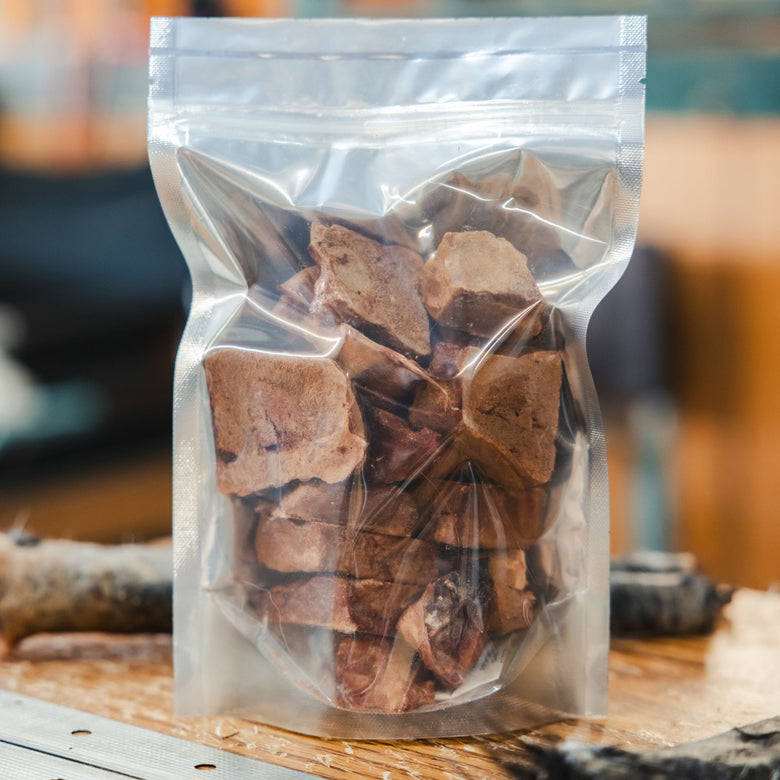
Our freeze-dried liver bites contain just liver and are meant as rewards. A hide roll serves a different purpose again: it gives your dog something to work on during a supervised chew session. Our guide to liver bites and hide chews shows how to choose between those two extras.
If your veterinarian has prescribed a diet, ask which training rewards fit it. Often the easiest question to bring to the clinic is the label itself: “Can I use some of this daily ration on walks?”


