

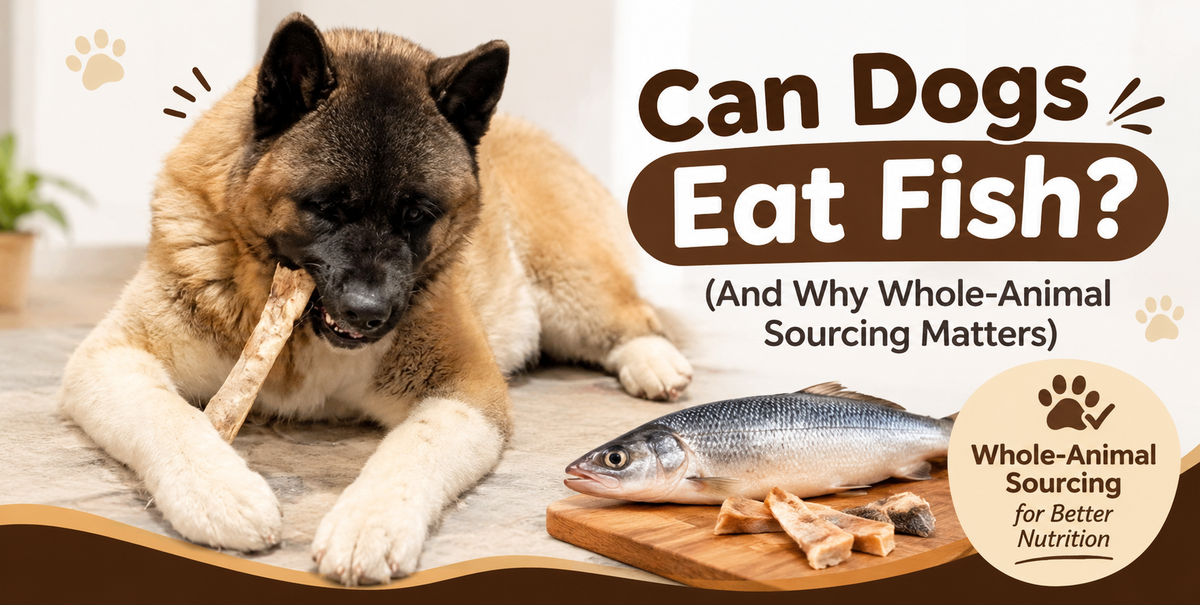
If you have ever stood in the pet food aisle staring at a bag of kibble covered in vibrant pictures of wild salmon, you’ve probably wondered: Can dogs actually eat fish?
The short answer is a resounding yes. Clean, correctly prepared fish is an incredible source of lean protein and joint-supporting omega-3 fatty acids for your pup.
But there is a catch. In the massive commercial pet food industry, the "healthy glow" of fish is frequently used as a marketing shield. While a label might boast "fresh salmon," the actual ingredient inside is often a highly processed, nutrient-stripped slurry padded out with cheap industrial fillers.
This transparency issue affects the entire pet food industry, not just seafood. And it’s exactly why whole-animal sourcing matters.
At Ugly Chews, our core values extreme honesty, zero industrial chemicals, and utilizing the whole animal exactly as nature intended- apply to everything your dog consumes. Even though our hands are firmly on the land crafting raw, natural beef treats or rawhide for dogs, we believe dog owners should have the unfiltered truth about what goes into their pup's bowl, whether it comes from a pasture or the ocean.
Can Dogs Safely Eat Fish?
Yes, numerous healthy dogs can safely eat fish, provided it is fresh, thoroughly cooked, clean, and free of bones or toxins.
As a dietary addition, fish serves as an excellent supplemental protein to support strong muscles and overall body function. Specific fatty fish varieties are packed with omega-3 fatty acids (like EPA and DHA), which are excellent for maintaining a shiny coat, healthy skin, and a resilient immune system.
However, fish should remain a treat or a supplement rather than a complete meal replacement. A dog's primary diet must always be properly balanced with the specific ratios of proteins, fats, vitamins, and minerals they need to thrive.
Which Fish Are Good for Dogs?
Not all fish are created equal. As a rule of thumb, smaller, shorter-lived fish are the best options because they have less time to accumulate dangerous heavy metals like mercury.
|
Fish Type |
Potential Benefits |
Important Consideration |
|
Salmon |
Protein and omega-3 fatty acids |
Must be thoroughly cooked and deboned |
|
Sardines |
Omega-3 fats, protein, and minerals |
Choose plain varieties without added salt |
|
Cod |
Lean protein and essential nutrients |
Serve fully cooked without bones |
|
Herring |
Protein and omega-3 fatty acids |
Avoid smoked or heavily salted versions |
|
Whitefish |
Lean protein and useful nutrients |
Remove bones and cook thoroughly |
|
Flounder |
Lean protein |
Serve plain and properly deboned |
Every dog has a different choice. Pups with specific health conditions may need to avoid certain nutrients, so it is always wise to check with your vet before introducing a new fish to their routine.
What Nutrients Does Fish Provide?
When fed in moderation, clean fish introduces several powerful nutrients to a dog’s diet:
- High-Quality Protein: Supplies the essential amino acids required for muscle development, tissue repair, and daily energy.
- Omega-3 Fatty Acids: Found abundantly in oily fish like salmon and sardines. These healthy fats support joint mobility, skin health, and a normal inflammatory response.
- Essential Vitamins: Depending on the species, fish provides crucial B vitamins and Vitamin D, which aid metabolism and nervous system health.
- Vital Minerals: Contains natural sources of selenium, iodine, zinc, and phosphorus to support thyroid function and bone health.
How Should Fish Be Prepared?
The way you prepare fish makes all the difference. A highly nutritious ingredient can quickly become dangerous if it is served raw, fried, or heavily spiced.
Follow these basic safety steps:
- Debone completely: Carefully remove all visible bones, fins, and sharp edges to prevent choking or internal punctures.
- Clean thoroughly: Wash the fish well and discard all unwanted internal organs.
- Cook plain: Poach, steam, or bake the fish thoroughly.
- Skip the extras: Never use butter, cooking oils, salt, or rich sauces.
- Toss the aromatics: Keep garlic, onions, and spicy seasonings far away from your dog's food, as these can be highly toxic.
- Cool and portion: Let the fish cool completely, and start with a very small bite to test your dog's digestive tolerance.
|
Note: Avoid sharing fried fish, fish sticks, or smoked seafood. These choices are loaded with excess fats, sodium, and oils that can severely upset a dog’s stomach or trigger pancreatitis. |
Fish That Dogs Should Avoid
Some seafood carries a much higher risk of heavy metal poisoning, parasite transmission, or choking. Steer clear of the following:
|
Fish or preparation |
Why to avoid it |
|
Shark |
High potential for mercury accumulation |
|
Swordfish |
Large, long-lived fish with higher mercury risk |
|
King mackerel |
Can contain elevated mercury levels |
|
Raw salmon |
May carry parasites and harmful bacteria |
|
Raw or undercooked fish |
Increased risk of foodborne illness |
|
Fried fish |
Excess fat and oil can cause digestive problems |
|
Smoked fish |
Often contains too much salt |
The American Veterinary Medical Association (AVMA) strongly discourages feeding raw or undercooked animal proteins due to pathogen risks. If your dog accidentally ingests raw fish—especially wild salmon or trout—contact your veterinarian immediately.
Why Whole-Animal Sourcing Matters
Sourcing isn't just about picking the right species; it’s about knowing exactly how that animal was handled from pasture (or ocean) to package.
Whole-animal sourcing is a philosophy centered on respect and efficiency. It ensures that every usable, nutrient-dense part of a harvested animal is put to practical use rather than left to rot in a landfill.
When pet companies embrace true whole-animal sourcing, it changes everything:
- True Traceability: Pet parents can easily track exactly where an ingredient came from, how it was handled, and how fresh it is.
- Radical Waste Reduction: By-products that are incredibly healthy for animals but discarded by human markets are salvaged responsibly, drastically shrinking our environmental footprint.
- Manufacturing Transparency: It forces companies to explain their cleaning, cutting, and preserving methods openly, leaving no room for hidden chemicals.
How Ugly Chews Applies This Philosophy
Our zero-waste, whole animal ethos is precisely what makes Ugly Chews so unique.
Whereas we rely on other people to catch the fish, we work directly with small family ranches and butchers located in Wyoming, Utah, and Idaho to reclaim pristine, untouched natural beef hides from the waste heap.
We handcraft every single-ingredient dog treat at our farm in Bear River, Wyoming. As a fully transparent, registered USA business entity (Wyoming Secretary of State Filing ID: 2022 - 001101720), we leave nothing to guesswork. We don’t soak our hides in toxic chemical brines, bleach, or artificial preservatives. We simply clean them with high-pressure water, hand-flesh them to keep them lean, and dry them in direct UV sunlight.
The end product? A one-ingredient, natural chew in its purest form.
Fish provides your dog with clean nutrition served up in a bowl, while our beef hides provide your dogs with hours of safe and sturdy mental enrichment from the comfort of your living room floor. The common thread between them is our rejection of the processed nature of the commercial pet industry.
How Much Fish Can Dogs Eat?
Moderation is key. Any extra food or treat outside of your dog's core kibble or raw diet should make up no more than 10% of their daily caloric intake.
- Introduce fish slowly with a single, plain, cooked bite.
- Watch your dog for 24 hours for any signs of vomiting, diarrhea, or allergic itching.
- Do not introduce other new foods at the exact same time so you can accurately track their reaction.
-
Always consult your vet before making any fish a permanent, daily fixture in your dog’s diet.
Making More Informed Choices for Your Pup
Whether you are introducing a piece of baked cod to your dog's bowl or handing them a handmade chew to work on for the afternoon, sourcing matters. Understanding where an ingredient comes from, how it was handled, and what was added to it is the greatest tool you have as a responsible pet owner.
At Ugly Chews, we take the ugly, unrefined, completely natural parts of local cattle and handcraft them into transparent, single-ingredient treats. No shortcuts, no toxic corporate cover-ups—just real food, exactly as nature intended.
Frequently Asked Questions
1. Can dogs eat fish every day?
Yes; dogs can eat clean fish regularly if it is balanced correctly within a formulated diet. It is generally safest and easiest to offer plain, cooked fish as an occasional, high-value treat.
2. Can dogs eat fish skin?
Yes, but only if it is completely unseasoned, scales removed, and thoroughly cooked without oil. Air-dried fish skin treats from trusted, transparent manufacturers are a great alternative.
3. Is raw fish safe for dogs?
No. Raw fish poses a significant threat of parasites and harmful bacteria that can make your pup violently ill and create cross-contamination hazards for human family members in your household. Always cook fish completely.
4. Why is whole-animal sourcing important for dog products?
It eliminates industrial waste, ensures you aren't feeding your dog highly chemicalized fillers disguised as "meat," and gives you total clarity over what your dog is putting into their body.


